WARDS & MARKETS
Minato Ward Property Guide: Why Azabu, Roppongi & Akasaka Command Tokyo's Highest Prices
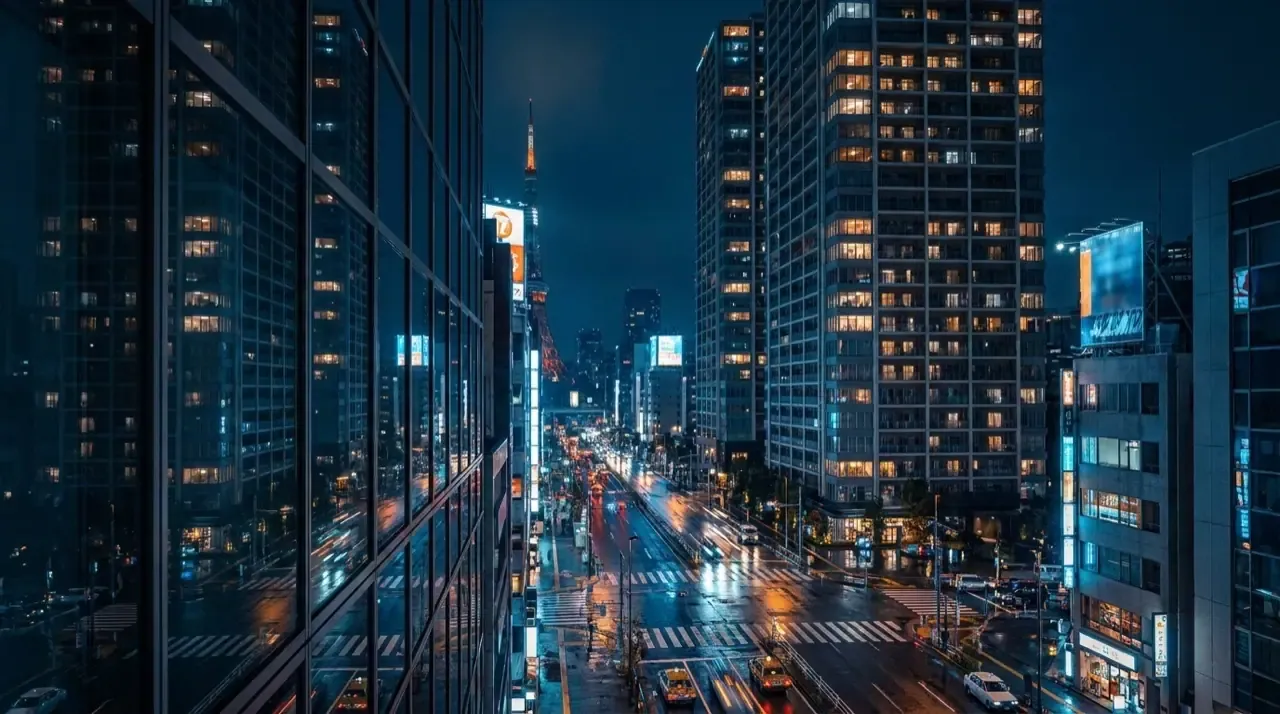
Azabu, Roppongi, Akasaka — Minato Ward sits at the top of Tokyo's market. A Tokyo-based insider breaks down prices, neighborhoods, and what…
On this page 7
TL;DR: Minato Ward is the default answer when a foreign buyer says “I want the best address in Tokyo.” Azabu, Roppongi, and Akasaka are genuinely world-class and priced accordingly. Expect roughly ¥1.5–2.5M per sqm for quality stock. Capital preservation here is credible. Yield is not the story.
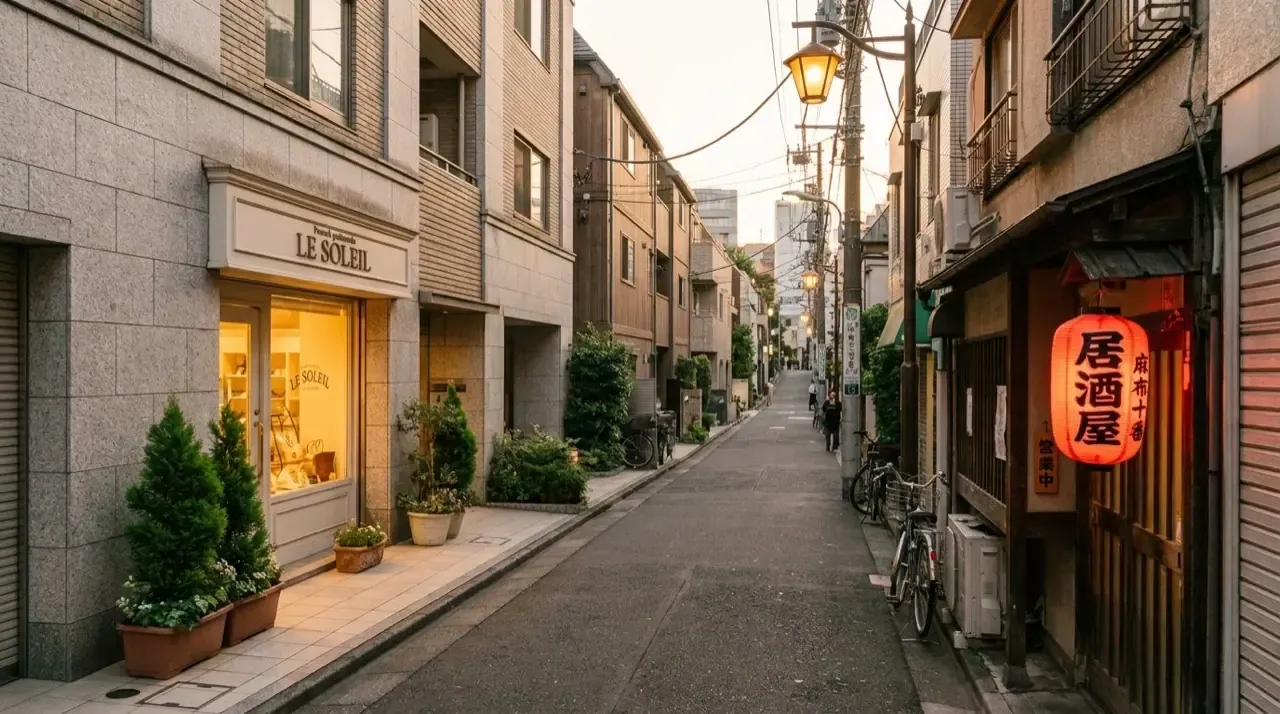
Walk out of Azabu-Juban Station on the Namboku Line — Exit 4 — and turn left onto Juban-dori. Within thirty seconds you’ve passed a French patisserie, an izakaya from 1963, and two women speaking Mandarin into their phones. The building directly above you might be selling at ¥180M for a 72 sqm flat. Old Tokyo and new money, layered on top of each other. Dense, walkable, priced accordingly.
What does property cost in Minato Ward?
This is the number everyone wants. The honest range:
Azabu-Juban and the surrounding streets of Motoazabu and Minamiazabu run around ¥1.5M to ¥2.5M per sqm for mid-to-high-quality resale condominiums. New build towers in prime spots push past that. A 70 sqm two-bedroom in a decent building — say, built after 2005 with a concierge — will likely cost somewhere in the ¥100M–¥160M range depending on floor and view.
Roppongi proper is messier. The area around Roppongi Hills and Midtown has prestige towers trading at similar or higher per-sqm rates. Street-level Roppongi has noise, nightlife, and buildings from the 1980s that some sellers still price at a premium. Know what you’re buying.
Akasaka runs roughly ¥1.2M–¥2.0M per sqm, with some pockets near Akasaka-Mitsuke that are genuinely undervalued relative to their commute access and quality of life.
From the desk — In a decade of closings in this ward, the buyers who get burned are almost always the ones who fell for the address before they pulled the comparables; I keep watching prestige-priced off-market units sit unsold for a year while the seller insists the name alone is worth the premium. The single document that has saved my clients the most money is not the floor plan, it is the homeowners association reserve fund balance.
What makes Minato Ward special for foreign buyers?
Embassies and expat infrastructure. Around 60 foreign embassies are in Minato Ward. That means international schools within a short cab ride (the British School in Tokyo, ASIJ nearby, Deutsche Schule Tokyo), English-language medical clinics, and a critical mass of foreign residents who’ve already solved the bureaucratic puzzles you’ll face.
Transport. Minato is served by the Hibiya, Namboku, Ginza, Asakusa, Oedo, and Toei Mita lines, plus Yamanote stops at Shinagawa and Hamamatsucho. Rarely more than one or two stops from somewhere important.
Tenant profile. Minato commands the highest expatriate rents in Tokyo. Corporate housing allowances for Azabu-Juban can run ¥500,000–¥700,000/month for a 100 sqm flat, as of writing. That demand is real and sticky.
Related reading: Who Pays Your Rent: The Expat Executive Tenant Tokyo Landlords Quietly Fight Over.
Which Minato sub-neighborhood should I target?
My honest ranking for foreign buyers:
Azabu-Juban — top pick. Walkable, international, good retail at street level, multiple line access. Resale is active because the buyer pool is large. Downside: premium buildings here attract speculative pricing. You need comparable data before you bid.
Motoazabu / Minamiazabu — quieter, hillier, more residential. Slightly lower per-sqm pricing in some pockets. Older low-rises on big plots, some with hidden value. Expat families cluster here. Harder to transact because stock is thin.
Akasaka — underrated. Good transport, solid restaurants, prices that don’t carry the Azabu premium. Less cache-conscious, more practical.
Roppongi — selective only. The address carries weight but the street environment is patchy. A landmark tower with strong management is fine. A 1990s mid-rise on the back streets is a different bet.
Shirokane / Shirokanedai — technically Minato, different feel. Low-rise, leafy, extremely quiet. High-end, expensive, less liquid than Azabu. The buyer pool is mostly wealthy Japanese. Foreign buyers can absolutely buy here — just understand your exit.
Related reading: The Train Line Station Premium on Tokyo Property: What You Pay For Access.
Can foreigners buy property in Minato Ward without hassle?
Japan has no legal restriction on foreign property ownership. No residency, no visa required. You can buy as an individual or through a Japanese or foreign legal entity.
The practical complications are financing and banking. Japanese banks generally won’t lend to non-residents. If you want a mortgage you need Japan residency and often an employment record here. Most foreign buyers in Minato are cash buyers or use offshore financing. Build that into your planning early.
Tax treatment matters too. Non-residents pay Japanese income tax on rental income, withheld at source. Capital gains are taxable on disposal. Manageable but they require a licensed tax accountant who handles international cases. Get that relationship in place before you sign anything.
What does the rental market look like in Minato?
Gross yields in Minato are low. Expect roughly 2.0–3.5% gross, with the upper end reachable on smaller units (30–45 sqm). On a ¥150M family flat, you might achieve around 2.2–2.5% gross — net after management fees, property tax, and vacancy looks worse.
Minato is a capital-appreciation and lifestyle play. If someone is selling you 4–5% yields in Azabu-Juban, check the math carefully. Sustainable gross yield on quality assets is closer to 2.5–3.0%. Short-term rentals (minpaku) can push numbers higher on specific older stock, but that’s a different operation entirely.
Corporate tenant demand remains strong. Japanese corporations and foreign companies with Tokyo offices still pay substantial housing allowances. That floor supports prices but doesn’t generate yield.
Where this goes wrong
- Overpaying on “prestige” without checking comparables. Some sellers — especially in off-market deals — price on address rather than recent transaction data. Pull property transaction price data from the MLIT portal before you make an offer.
- Old buildings with hidden repair obligations. The large-scale repair fund for some older Minato condos is underfunded. Request the homeowners association meeting minutes and the reserve fund balance. A thin reserve means the next special assessment hits every owner.
- Flood risk in low-lying areas. Parts of Minato near the Furukawa River flood plain show up on Tokyo’s hazard maps. Azabu-Juban Station itself has flooded in extreme rainfall events. Check the flood hazard map for any specific address.
- Earthquake vulnerability. Buildings from before the 1981 revised seismic code (the old earthquake code) exist in Minato. Some have been retrofitted; many haven’t. Always check the seismic inspection report.
- Liquidity illusion at the top. The ¥500M+ end is a thin market. Sales can take 12–18 months. If you might need to exit quickly, buy something more transactable.
FAQ
Can I get a mortgage in Japan as a foreign national? As a non-resident, almost certainly not from a Japanese bank. Residents with stable Japanese income have more options. Most buyers at this price point in Minato are cash buyers.
Is there a minimum purchase price or property type restriction for foreigners? No. Japan imposes no restrictions on foreign buyers. You can buy land, apartments, or buildings. The process is the same as for Japanese nationals.
What transaction costs should I budget? Roughly 6–8% on top of the purchase price: agent commission (3% + ¥60,000), registration taxes, stamp duty, judicial scrivener fees, and real estate acquisition tax. It adds up fast on a ¥150M purchase.
How does property management work if I’m overseas? You’ll need a Japanese property management company. They handle tenant communication, rent collection, and maintenance. Fees typically run 3–5% of monthly rent. Serious companies will report in English if you ask.
Is Minato Ward overpriced right now? Relative to central London, central Paris, or Manhattan — no. Relative to historical Tokyo prices, we’re near cycle highs. Buy because it fits your long-term plan, not because you expect 20% gains in three years.