WARDS & MARKETS
Shibuya's Decade-Long Rebuild: The New Center of Gravity
How Shibuya's "once-in-a-century" station rebuild — Scramble Square, Sakura Stage, Miyashita Park — reshaped a creative-tech tenant base and pulled residential demand toward Daikanyama and Ebisu.
On this page 6
TL;DR: Shibuya is roughly two-thirds through a “once-in-a-century” rebuild that won’t fully finish until around fiscal 2034 — and the parts already open (Scramble Square, Sakura Stage, Miyashita Park) have already turned a messy transit hub into a magnet for creative-tech tenants and the people who work for them. That demand doesn’t stay inside the station footprint; it spills into Daikanyama and Ebisu, where supply is tight and land prices are climbing. If you want exposure to Tokyo’s most reliable young-professional rental demand, the window to buy ahead of the back half of this build is still open — but it’s narrowing. (All figures directional, as of writing.)
Shibuya by the numbers (primary data, 2026): official residential land in Shibuya ward averaged ¥1,874,100/㎡ in the 2026 chika koji (+11.0% YoY) and commercial land ¥9,297,600/㎡ (+13.8%); the ward’s population was 230,880 on January 1, 2026 (-522, the only one of the 23 wards to shrink), with 13,280 foreign residents; 1,845 minpaku dwellings were notified as of July 15, 2026 (Japan Tourism Agency). Sources: Tokyo 23 Wards Property Data 2026.
Why Shibuya Is Different From Tokyo’s Other Megaprojects
Every Tokyo agent will point you at a redevelopment story right now — Azabudai Hills, the Toranomon cluster, the Yaesu rebuild around Tokyo Station. Shibuya is a different animal, and it matters why.
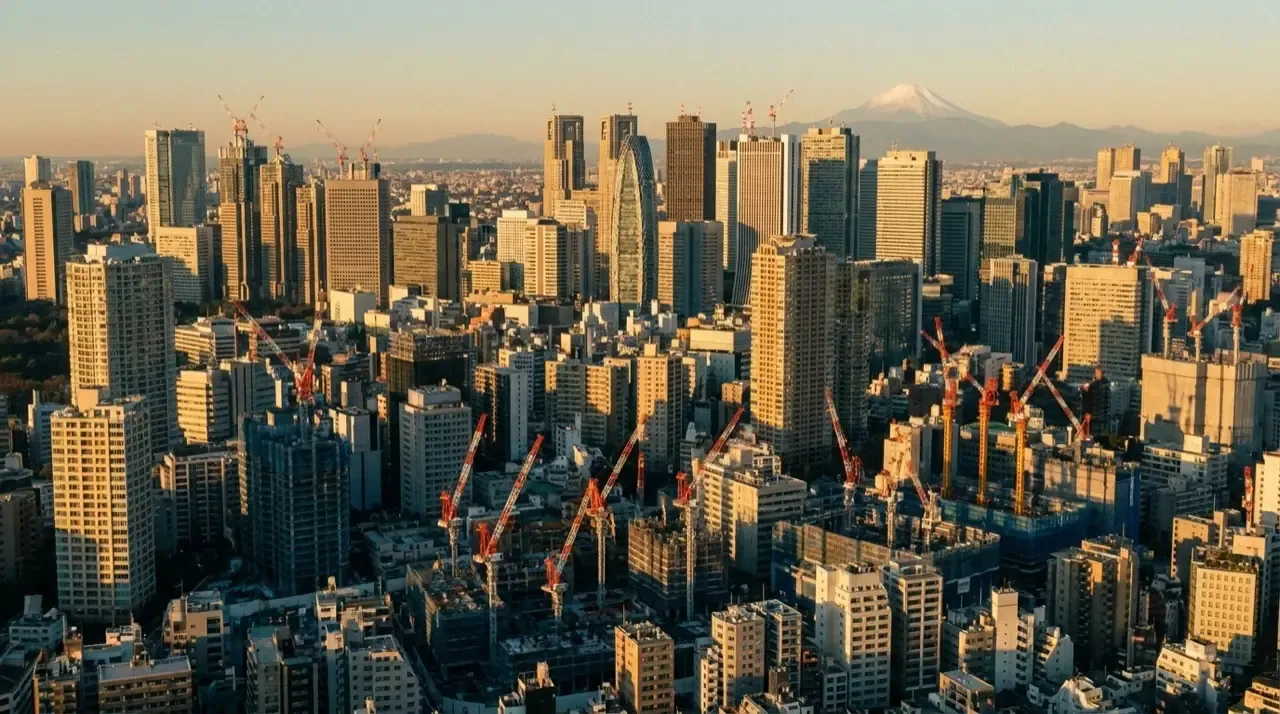
Most of those projects are single mega-towers dropped onto cleared land. Shibuya is a station rebuild — the untangling of a knot where four train operators and nine lines crossed at different heights with no coherent ground plan. Tokyu, JR, Tokyo Metro and the ward have spent over a decade pulling rail lines apart, building new pedestrian decks, and freeing up land parcels one by one. That’s slower and uglier than a single tower, but it’s also more durable: when it’s done, the entire district works better, not just one block.
The honest caveat: this is a long story. Phase I of Shibuya Scramble Square — the 47-story, roughly 230-meter East tower that’s now the tallest building in the ward — opened back in November 2019. The Central and West towers of Scramble Square aren’t due until around 2031, and full station-area completion is targeted for roughly fiscal 2034 (directional, as of writing). You are buying into a work in progress.
From the desk — In years of letting units around this station, the pattern I trust most isn’t the architecture, it’s the office floors filling up first. When the creative-tech names commit to new space at the station, the well-paid late-20s-to-40s tenants follow within a year or two, and that demand reliably pushes outward into the Daikanyama and Ebisu rings, where I never seem to have enough good listings to show.
Related reading: Tokyo’s Redevelopment Supercycle: Every Major Project, Mapped.
The Pieces Already Built — and What They Did
You don’t have to imagine the payoff. A lot of it is already standing and leased.
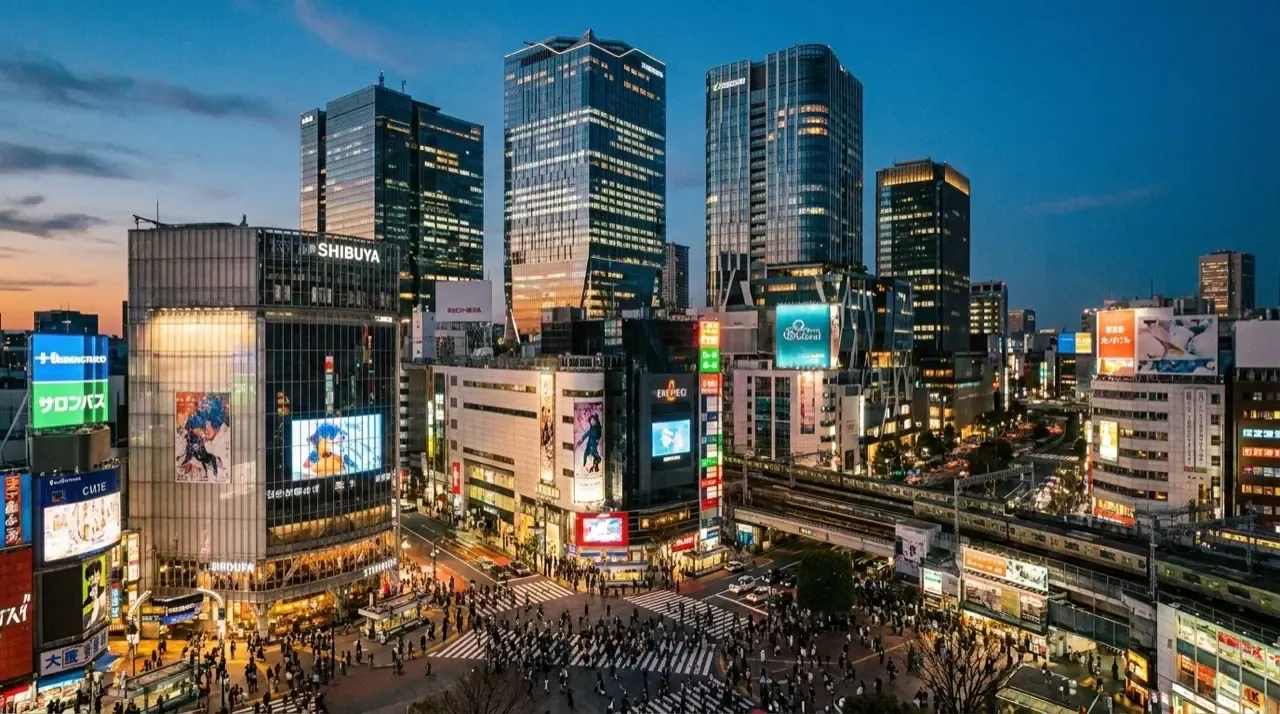
- Shibuya Scramble Square (East, 2019) put a major office tower and the Shibuya Sky observation deck directly on top of the station. It became the new front door and pulled anchor tenants — CyberAgent, one of Japan’s biggest internet companies, relocated its headquarters here.
- Miyashita Park (2020) converted a tired elevated park into a 300-meter rooftop-park-over-retail-and-hotel run (RAYARD Miyashita Park), with around 90 tenants. It re-connected the Shibuya–Harajuku corridor that used to be dead ground.
- Shibuya Stream (2018) and Shibuya Sakura Stage (2024) reclaimed the south side. Sakura Stage alone is a roughly 254,000-square-meter complex spanning offices, residences, retail, and a Hyatt House hotel. Google’s Japan operation, long a Shibuya fixture, sits across this southern axis (Stream and Sakura Stage).
- Shibuya Hikarie (2012) was the opening act over a decade ago and proved the thesis: build quality space at the station, and tenants come.
The pattern is consistent. Commercial space in Shibuya has been chronically under-supplied for the kind of tenant that wants it, so each new opening has filled fast. That’s the opposite of a glut.
The Tenant Base: Why “Bit Valley” Is the Real Asset
Here’s the part that should interest a buyer more than the architecture.
Shibuya has been Tokyo’s tech and creative cluster since the late-1990s “Bit Valley” era. CyberAgent, DeNA, Mixi, GMO, DMM and a long tail of startups grew up here; Google, and a who’s-who of design, advertising, and gaming firms layer on top. The redevelopment didn’t create that base — it re-anchored it. When new Grade-A office floors opened at the station, the marquee names took them rather than decamping to Marunouchi or Toranomon.
Why this matters to you as a residential buyer: tech and creative firms employ exactly the tenant you want — well-paid people in their late 20s to 40s, many of them foreign or internationally minded, who prize a short commute and will pay for it. Tokyo’s prime office vacancy is roughly 2.6% and rents are at multi-year highs (directional, as of writing), which tells you those employers are committed and expanding here, not retreating. Office strength upstream is the leading indicator for residential demand downstream.
How the Rebuild Reshaped Residential Demand
Shibuya Station itself is mostly commercial — you’re not buying a family home on Center-gai. The residential dividend shows up in the rings around the station, and the rebuild has tightened all of them.
Shibuya Ward overall. Residential land prices in the ward rose roughly 11.5% year-on-year in 2025, and average condo pricing sits near the top of Tokyo’s 23 wards (directional, as of writing). This is no longer a contrarian bet; it’s a core-asset bet.
Daikanyama. A ten-minute walk or one stop from Shibuya, Daikanyama is the low-rise, design-led enclave that benefits most directly from a nicer, more walkable Shibuya next door — without the crowds. Land around Daikanyama Station has pushed toward roughly ¥2.4 million per square meter, up nearly 7% in a year (directional, as of writing). Supply here is structurally scarce because the area is low-rise by character and zoning; that scarcity is the investment case.
Ebisu. Just south, Ebisu consistently tops Tokyo “most desirable place to live” surveys. Yebisu Garden Place anchors a cluster of upscale apartments and dining, and the station links Shibuya, Meguro and the Yamanote loop. Ebisu gives you the Shibuya-adjacent lifestyle with a calmer, more residential feel — and deep, stable rental demand from professionals who want both.
The mechanism is simple: the rebuild makes the Shibuya core more valuable as a place to work and play, and that radiates outward to the places people actually want to live. Daikanyama and Ebisu are where the work-here-live-here premium concentrates.
The Risks — Said Plainly
No hype, so here’s the other side.
- It’s not finished. Construction noise, hoarding, and disrupted pedestrian routes will persist around the station into the early 2030s. If you buy a unit with a station-front view, “what’s there now” is not “what’s there in 2031.”
- Prices have already moved. The easy money — buying Shibuya-adjacent before the market noticed — is largely gone. You’re now buying a recognized winner, so underwrite on yield and tenant quality, not on a re-rating bet.
- Yields are thin. Prime Shibuya/Daikanyama/Ebisu gross yields are modest by Tokyo standards. The thesis is durable demand, currency-cheap entry for foreign buyers, and capital preservation — not high cash flow.
A unit that pencils out only if prices keep rising 11% a year is a unit you’ve mispriced. Buy ones that work at flat rents.
The Buyer’s Playbook
If you want Shibuya exposure, match the asset to the goal:
- Maximum demand durability: a compact 1LDK–2LDK in Ebisu or Daikanyama within a short walk of the station. Easiest to let, easiest to exit.
- Lifestyle plus appreciation: a low-rise designer unit in Daikanyama — scarce supply, strong owner-occupier and premium-rental demand.
- Pure rental yield play: a smaller unit on a Shibuya-adjacent line one or two stops out, where pricing is softer but the same commuter base applies.
Run the actual numbers before you fall in love with a building. Our tools let you model yield and carrying costs, and our ward guides for Shibuya, Daikanyama and Ebisu go deeper on building stock and pricing. If you’re weighing Shibuya against Minato’s tower clusters, compare them side by side.
The rebuild’s first half already proved the thesis: better Shibuya, more tenants, tighter residential supply nearby. The second half — Scramble Square’s remaining towers and the 2034 finish — is still ahead, and the surrounding residential market hasn’t fully priced a completed Shibuya. Your move is to underwrite a specific unit in Daikanyama or Ebisu this quarter, on flat-rent assumptions, and buy before the next openings reset the headlines. Pull three listings, run them through the tools, and book a viewing.