STRATEGY & YIELD
Gross vs Net Yield in Japan: Why That 8% Becomes 4.1% After You Pay for Everything
That 8% gross yield on Japanese listing sites hides costs that cut returns in half. Here's every deduction, line by line, from gross to net yield in Japan.
On this page 7
TL;DR: Japanese property listings quote gross yield (hyomen rimawari), a figure that ignores almost every real cost of ownership. After management fees, maintenance reserves, taxes, insurance, and a realistic vacancy buffer, 8% gross typically lands somewhere between 4% and 4.5% net for a standard Tokyo apartment. That gap isn’t a rounding error — it’s ¥387,000 a year on a ¥10M property.
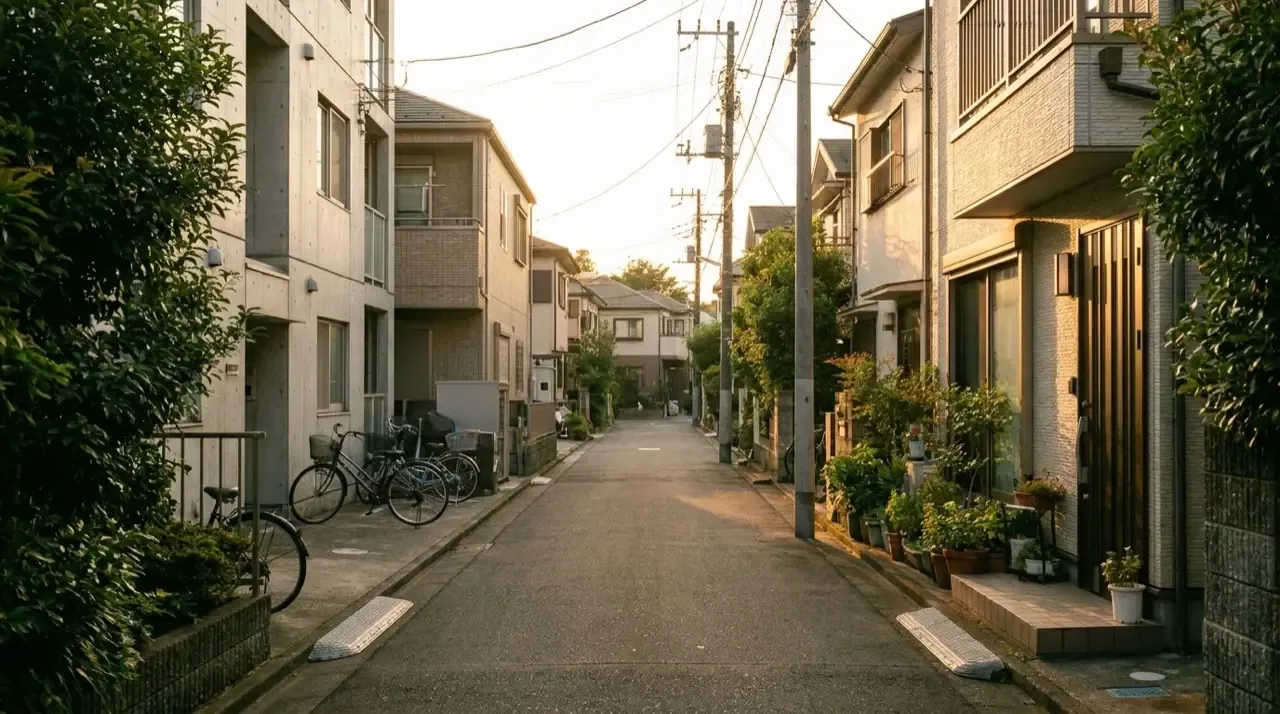
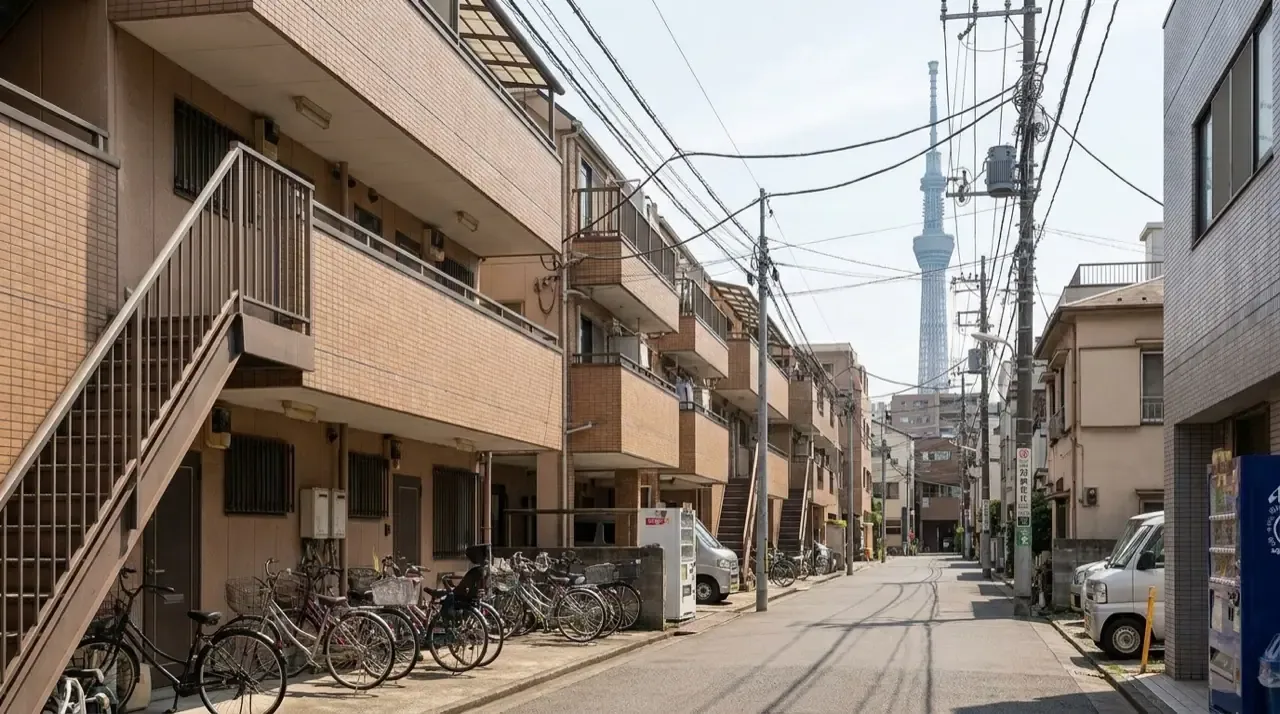
I was looking at a 1K in Adachi-ku last month. Headline: 8.2% yield. The listing showed annual rent income of ¥840,000 on a ¥10.2M asking price.
Then I started adding up the costs.
I had 4.4% net by the time I was done — acceptable for that location, but nowhere near 8.2%. The gap is ¥387,000 a year. Over a ten-year hold: ¥3.87M of return the listing implied but never existed.
Sellers aren’t being dishonest. This is just how Japanese real estate advertises itself. Every foreign buyer needs to understand the convention before they get excited about a number.
What Does “Gross Yield” Actually Mean in Japan?
The formula is embarrassingly simple:
Gross yield = Annual rent ÷ Purchase price × 100
No taxes. No vacancy. No management. No repair reserves. Gross rent divided by price.
On a ¥10.2M property renting for ¥70,000/month:
- Annual rent: ¥840,000
- Gross yield: ¥840,000 ÷ ¥10,200,000 = 8.24%
This number appears on every listing portal — Athome, SUUMO, and the rest — and in almost every agent email you receive. Industry standard. Also largely meaningless for investment decisions.
From the desk — After years of walking foreign buyers through these listings, the eight-percent headline is the single most reliable way to spot who has done their homework: the disciplined ones ask for the HOA fee and the repair-reserve figure before they get excited, and the ones who skip it are the same ones who later call me upset that their real return came in below five. The gap is never a surprise to anyone who priced the costs in first.
Related reading: Cap Rate Explained for Japan — and Why Local Agents Barely Use It.
What Does “Net Yield” Mean, and How Is It Calculated?
Net yield subtracts actual operating costs from income before dividing.
Net yield = (Annual rent − Annual costs) ÷ Purchase price × 100
The challenge is defining “annual costs” completely. Most Japanese agents show a partial net figure that excludes property tax, insurance, and sometimes even the management fee. True net yield — what I call investor net — includes everything except financing.
Every Cost Between Gross and Net: A Line-by-Line Walk
Figures below are illustrative — representative of this deal type, not a specific audited property.
Staying with that Adachi 1K. ¥10.2M purchase price, ¥70,000/month potential rent.
Gross annual income: ¥840,000
Now subtract:
| Cost Item | Annual Amount | Notes |
|---|---|---|
| Vacancy allowance (10%) | −¥84,000 | Realistic for older stock |
| PM company fee (5% of collected rent) | −¥37,800 | Varies 5–8%; this is mid-range |
| HOA/common area fee (kanrihi) | −¥12,000 | Paid by owner when vacant too |
| Building repair reserve (shuzen tsumitatekin) | −¥9,600 | ¥800/month, older building |
| Fixed-asset tax | −¥42,000 | Approx 1.4% of assessed value; assessed ≠ market |
| City planning tax | −¥12,000 | 0.3% of assessed value in most Tokyo wards |
| Non-life insurance (fire + earthquake) | −¥18,000 | Annual premium, illustrative |
| Minor repair reserve (DIY fund) | −¥20,000 | Roughly ¥2,000/month; units need touch-ups |
Total annual costs: ¥235,400
Net operating income: ¥840,000 − ¥235,400 = ¥604,600
Net yield: ¥604,600 ÷ ¥10,200,000 = 5.93%
That’s before acquisition costs. Roughly 7–8% of purchase for a foreigner using an agent — registration, stamp duty, real estate acquisition tax, agent fees, judicial scrivener. Spread ¥750,000 of acquisition costs over a 10-year hold: ¥75,000/year off income, pulling the effective annual net to around 5.2%.
Still decent for Adachi. Still nothing like 8.24%.
Why the Gap Is Bigger in Some Buildings
The spread between gross and net isn’t fixed. It widens in:
Older buildings with high repair reserves. A 1981 build often carries a repair reserve of ¥15,000–¥25,000/month on a small unit. That alone adds 2+ percentage points of drag.
Buildings with high HOA fees. Tower condos with doormen and multiple elevators charge HOA fees that would embarrass New York buildings. ¥30,000–¥50,000/month HOA fee on a unit renting for ¥120,000 is a 25–40% cost-to-income ratio before you’ve paid a single tax.
High-vacancy buildings or areas. Vacancy in regional cities runs 15–20%. An 8% gross yield with 20% vacancy is a 6.4% effective gross before costs. Net gets worse from there.
Properties where the tenant pays below-market rent. Japan’s tenant protection laws make rent increases nearly impossible without the tenant’s cooperation. “Current rent” and “market rent” can be 10–20% apart in older central buildings. Your upside requires a vacancy event — and vacancy costs money.
How to Evaluate a Japanese Listing Yield
When you see a listing, run this filter before getting excited:
- Divide gross yield by 1.5. Not scientific, but 8% ÷ 1.5 = 5.3% is a faster sanity check than most buyers do.
- Ask the agent for the HOA fee and repair reserve amount. Both numbers should be on the mandatory disclosure document (jutaku jyuyo jiko setsumeisho). If the agent won’t give them before offer, walk.
- Add 10% vacancy to your model. Even if the current tenant is in place. They will leave eventually.
- Get the most recent fixed-asset tax bill. Sellers have it. It’s a public document. The assessed value will surprise you — sometimes low, sometimes not.
- Calculate net yield yourself. Their “net” often omits property tax.
Where This Goes Wrong
- Assuming the current tenant’s rent will hold. It often won’t — either because it’s below market (and you’re stuck) or because the tenant leaves and the turnover costs eat a quarter’s rent.
- Forgetting acquisition costs exist. The real cost of a ¥10M property is ¥10.7M–¥10.85M in cash out the door. Yield denominator should reflect that.
- Using 0% vacancy for an occupied building. The tenant will eventually leave. Budget for it.
- Ignoring the repair reserve trajectory. Japanese condo laws allow — and increasingly require — the building management association to raise repair reserves as buildings age. A ¥5,000/month reserve today can become ¥20,000/month in ten years. Model the trend, not the current number.
- Confusing net yield with cash-on-cash return. If you’re financing, your actual cash return on equity invested is different again. More on that in a separate piece.
FAQ
Q: Do Japanese agents ever quote true net yield? A: Sometimes. The term used is jisshitsu rimawari. But the costs included vary by agent. Always ask what’s excluded before trusting the number.
Q: Is 5% net yield good in Tokyo? A: Depends on the ward and the asset. For central Tokyo (Minato, Shibuya, Shinjuku), 3.5–4.5% net is more realistic for quality stock. 5% net in Setagaya or Edogawa is reasonable. 5% net in Adachi is fine. Context matters enormously.
Q: What’s a realistic total cost load as a percentage of gross rent? A: For a typical Tokyo 1K/1DK in an older building, budget 35–45% of gross potential rent for all operating costs including vacancy. So if gross potential rent is ¥840,000, actual net operating income is realistically ¥460,000–¥550,000 — rough, illustrative range.
Q: Does property tax in Japan change year to year? A: The rate is fixed (1.4% + 0.3% city planning tax in most urban areas), but the assessed value is revalued every three years. Newly purchased properties sometimes get a different assessed value than what the seller was paying. Check the current bill and confirm when the next revaluation is.
Q: Should I use gross or net yield to compare deals? A: Always net. Gross is useful only for a first-pass filter. Two properties with the same gross yield and different building ages, HOA fees, and locations can have net yields that differ by 2 full percentage points.