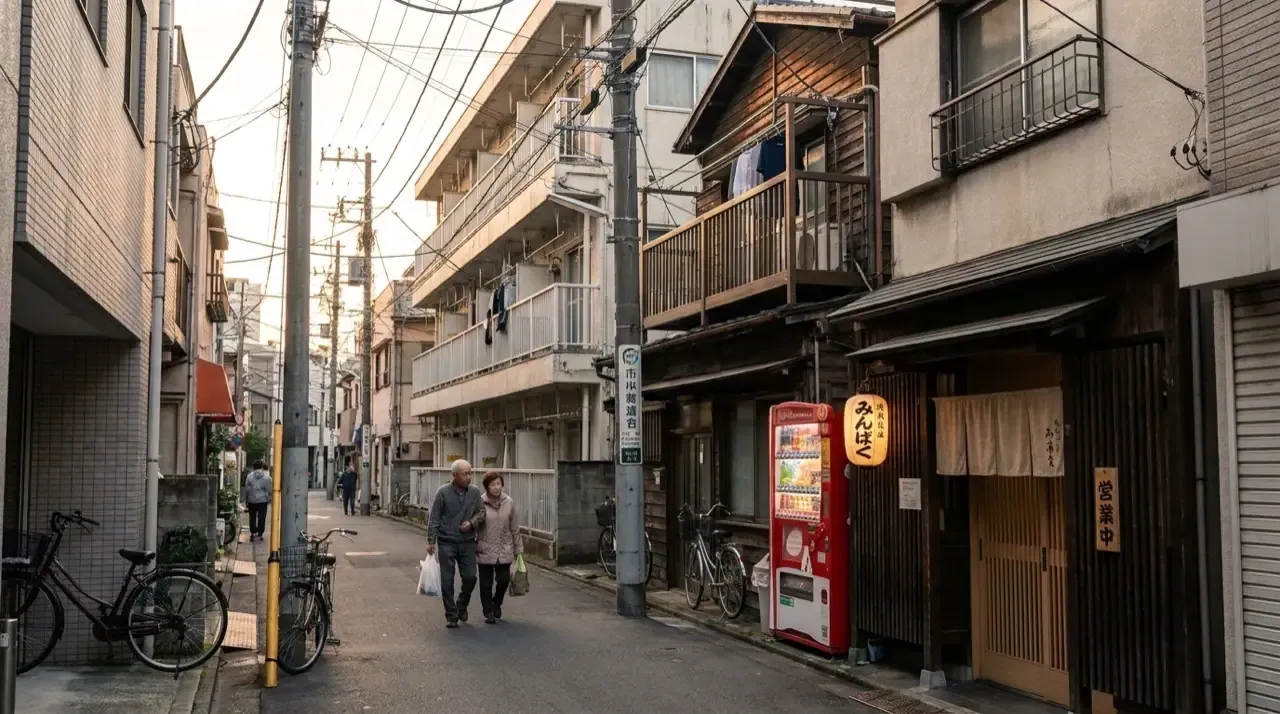
STRATEGY & YIELD
Minpaku vs Hotel/Ryokan License: The License Decision That Sets Your Ceiling
Japan's two STR license paths have completely different revenue ceilings, facility rules, and risk profiles. Here's how to choose before you buy.
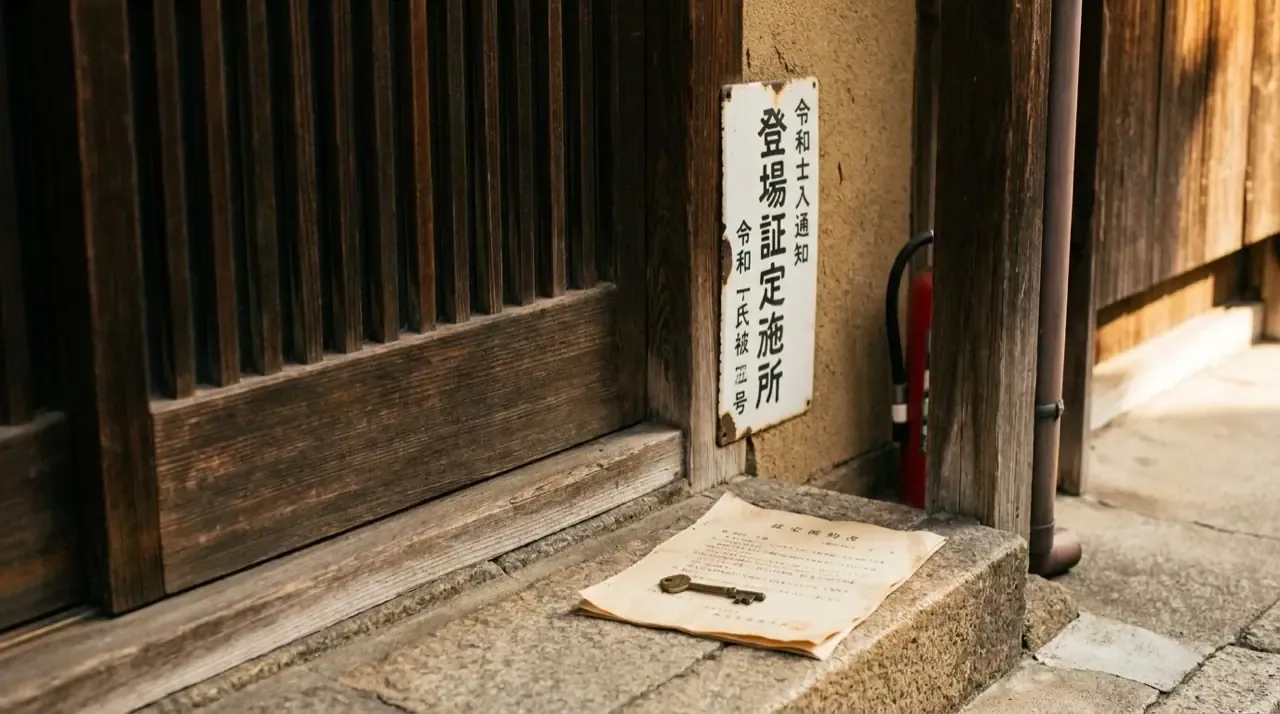
On this page 7
TL;DR: Japan has two main legal paths for short-term rental: the minpaku framework (180-day cap, lighter requirements) and the hotel/ryokan business license (no day cap, heavy facility requirements). Most foreign buyers default to minpaku because it’s easier to start. That’s not always wrong, but it’s often the lower-ceiling choice. The decision should be driven by the building, the neighborhood zoning, and your five-year revenue model.
A client asked me last year whether she should pursue a hotel/ryokan license for a property in Taito-ku. Detached two-story house. My first question wasn’t about the license — it was about the kitchen, the fire exits, and the toilet-to-room ratio. Those answer the license question faster than any spreadsheet.
She could get minpaku up in two months. The hotel/ryokan license path was eight months and ¥3.5M in renovation. Her building made minpaku the right call. The building decided, not preference.
What the Minpaku Framework Actually Gives You
The residential accommodation business registration is designed for residential properties. You’re renting your home (or someone else’s registered residence) to guests. The requirements are manageable:
- Register with the prefectural government
- Post required notices on-site (fire safety, noise rules, contact information)
- Maintain a guest ledger
- Appoint a management company or act as a registered minpaku manager if you’re not local
The ceiling: 180 operating days per calendar year. That’s the trade-off for the lighter regulatory burden.
Figures below are illustrative — representative operating scenarios, not guaranteed returns.
For a centrally located 1LDK in Tokyo running roughly ¥20,000 ADR at 65% occupancy within the 180-day window, gross room revenue runs roughly ¥2.3–2.5M per year. Enough to offset mortgage costs on a mid-range property — not enough to make the investment exceptional unless the purchase price is low.
From the desk — In a decade of walking foreign buyers through STR acquisitions, the pattern I keep seeing is that they fall for the building first and ask about the license last, when it should run the other way. The clients who win are the ones who let me pull the zoning map and the fire-exit layout before they ever picture the guest reviews, because the building quietly decides which license you can even hope for.
Related reading: Modeling a Kyoto Machiya STR: ADR, Occupancy, and the 180-Day Ceiling.
What the Hotel/Ryokan License Actually Requires
Japan’s hotel and ryokan business law covers hotels, ryokan, and what’s categorized as simple lodging (kani shukusho). The simple lodging classification is the one most residential STR investors pursue because the requirements are lower than full hotel classification.
For simple lodging in Tokyo (requirements vary by ward and property type):
- Minimum floor area: 33 sqm or 3.3 sqm per guest sleeping area, depending on jurisdiction
- Ceiling height: minimum 2.1m in sleeping rooms
- Fire safety: automatic fire alarm system, emergency lighting, fire extinguishers, exit signage meeting fire defense codes
- Sanitation: ventilation, lighting standards, designated washing/toilet facilities meeting public health center standards
- Zoning compliance: the property must sit in a zone where hotel/ryokan business is permitted — residential zones often exclude it
The public health center (hokenjo) inspection is the gating event. They visit the property and assess compliance. Fail the inspection and you restart the process.
A standard Tokyo condo is not hotel/ryokan-license-ready out of the box. A detached house sometimes is, especially older construction with generous layouts.
The Revenue Case for Pursuing a Hotel/Ryokan License
No day cap. That’s the number.
With a hotel/ryokan license, you can run 365 days. At the same 65% occupancy and ¥20,000 ADR (illustrative):
| License Type | Operating Days | Occupancy | Booked Nights | Gross Revenue (illustrative) |
|---|---|---|---|---|
| Minpaku | 180 | 65% | 117 | ~¥2,340,000 |
| Hotel/Ryokan license | 365 | 65% | 237 | ~¥4,740,000 |
The gross revenue delta is ¥2.4M per year. Over 10 years, that’s ¥24M in additional gross revenue before costs. If renovation to hotel/ryokan standards costs ¥3.5M, the payback period is roughly 1.5 years on revenue difference alone.
That math requires three things: the building passes inspection, the zoning permits it, and the occupancy assumption holds year-round. All three need verification before acquisition.
Zoning Is the First Gate, Not the License Application
The hotel/ryokan license is issued by the ward-level public health center, but the underlying zoning must permit commercial lodging use. In Tokyo, zoning categories where hotel/ryokan business is generally permitted include:
- Commercial zones
- Neighborhood commercial zones
- Semi-industrial zones
Many residential zones prohibit hotel-category operations outright. If you’re looking at a quiet residential neighborhood, a hotel/ryokan license may be legally impossible regardless of the building’s physical condition.
Check the zoning map before modeling hotel/ryokan revenue. The Tokyo Metropolitan Government publishes these online. Any licensed agent should pull this for you within minutes.
The Hybrid Reality Most Properties Land In
Most buyers end up with minpaku because their target properties are in mixed residential zones, their buildings are condominiums with building management bylaws, or the renovation cost for hotel/ryokan compliance exceeds the revenue uplift within their holding period.
Minpaku isn’t a consolation prize. At the right purchase price, 117 booked nights at ¥20,000 ADR still pencils. The mistake is modeling minpaku revenue as if the 180-day cap doesn’t exist — or buying a hotel/ryokan-viable building and running it as minpaku because the paperwork felt harder.
One more factor: management. The hotel/ryokan framework requires ongoing compliance reporting, guest log maintenance at a higher standard, and annual public health center inspections in some jurisdictions. If you’re running remotely as a foreign investor, a management company handling this adds roughly 20–25% of gross revenue to your cost structure. Factor that before projecting net margin.
Where This Goes Wrong
The building wins. You can want hotel/ryokan revenue; the physical building decides if you can have it. Old wooden construction may not meet fire safety requirements without significant structural intervention. Condominiums almost never qualify — building management association rules aside, the public health center won’t license a single unit in a residential condo block as a hotel.
Zoning surprises kill late in due diligence. I’ve seen buyers fall in love with a building, budget for hotel/ryokan renovation, and discover in week six that the site sits in a zone that prohibits hotel use. Pull the zoning map in week one.
The 180-day minpaku cap is harder to work around than people think. Some operators register multiple family member names to try to layer registrations. This is legally dubious and not a strategy I’d recommend to a foreign investor without Japanese-language legal support.
Municipal special rules. Even with a hotel/ryokan license, Tokyo wards can impose additional operating restrictions. Verify both the license path and local operating rules independently.
FAQ
Q: Can a foreign national directly apply for a hotel/ryokan license in Japan? A Japanese entity is typically required for the license application. Foreign investors usually structure through a GK (godo kaisha) or KK (kabushiki kaisha). Setup costs and timelines are part of the overall investment calculation.
Q: How long does hotel/ryokan license approval take? Standard process runs 2–6 months after the public health center inspection. Renovation lead time before the inspection adds to this. Budget 6–12 months from property acquisition to legal operation.
Q: Is minpaku registration transferable when I sell the property? No. The registration is tied to the registrant, not the property. A buyer would need to re-register. During the gap, the property cannot legally operate STR.
Q: What’s the penalty for operating a hotel/ryokan without a license? Violation of Japan’s hotel and ryokan business law carries criminal penalties including fines up to ¥1,000,000 and potential imprisonment. Enforcement has increased in tourist-heavy zones since 2020.
Q: If my property is in a commercial zone, is the hotel/ryokan license automatic? No. Zoning permits the use; it doesn’t grant the license. You still need the public health center inspection and compliance with all facility requirements.