INSIDER TAKE
Cash Is No Longer King: Japan Just Killed Deflation, and Real Estate Is the Trade
After 30 years, the Bank of Japan is hiking rates and inflation is beating target. The regime that punished hard assets has flipped, and Tokyo property is the cleanest way for a foreign buyer to ride nominal reflation with cheap leverage.

On this page 5
TL;DR: For thirty years, deflation made holding cash in Japan a winning trade and slowly bled real assets. That logic has now inverted: the Bank of Japan has exited negative rates and lifted its policy rate to a 30-year high, while inflation is on track to beat its 2% target for a fourth straight year. Tokyo rents, land and condo prices are all reflating at once, and because real interest rates are still negative, a foreign buyer can finance into the trade at a cost of leverage below the rate of asset inflation.
The regime that ran Japan for 30 years just flipped
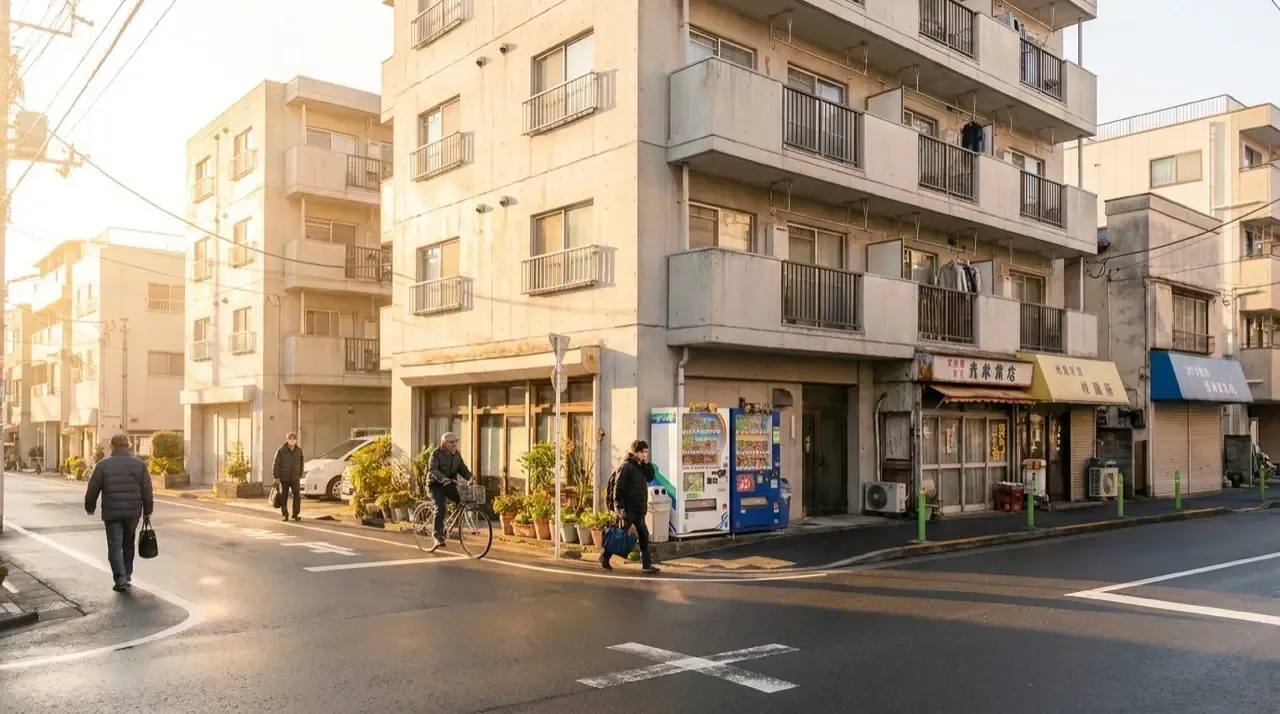
If you only remember one thing about Japanese real estate, remember this: from the early 1990s until very recently, the smartest, safest position in Japan was to hold cash and do nothing. Prices fell, so yen sitting in a bank gained purchasing power every year. Anyone who borrowed to own hard assets was fighting the tide. That single fact explains why Tokyo property looks cheap by global-city standards today — three lost decades of asset deflation suppressed it while London, New York and Sydney compounded upward.
That regime has ended. In 2024 the Bank of Japan (BOJ, Japan’s central bank) exited its negative interest-rate policy for the first time, and by December 2025 it had walked the policy rate up to roughly 0.75% — the highest since 1995 (figures directional, as of writing). At the same time, consumer inflation is tracking above the BOJ’s 2% target for a fourth consecutive year. Read those two together and the conclusion is blunt: the deflation trade is dead. Cash now loses real purchasing power every year it sits still, and the assets that deflation punished — land, buildings, rent rolls — are the ones that benefit.
One honest caveat: a higher policy rate is normally bad news for property, because borrowing costs rise. The reason it is not bad news here is the gap between the nominal rate and inflation, which we get to next.
From the desk — For most of my career I watched Japanese sellers treat cash as the safe default and hard property as the thing you offloaded, and that instinct is still everywhere in the listings I handle today. What is changing in front of me is the quiet recognition among local owners that sitting on yen now means a guaranteed annual loss, and the foreign buyers financing in at these rates are simply moving faster than the domestic wall of cash that is only beginning to stir.
Why a rate hike is bullish, not bearish, here
In most markets, a central bank raising rates cools real estate. Japan is the exception that proves the rule, because 0.75% against inflation running above 2% leaves the real interest rate — the rate after inflation — still negative. The BOJ itself still describes its stance as “accommodative.” In plain English: money is still cheap, and it is cheap relative to how fast nominal asset prices and rents are climbing.
That is the entire trade in one sentence. If you can borrow at a cost below the rate at which your asset and its income are inflating, leverage works for you rather than against you. The headline rate went up, but it went up far less than the things you would buy with it. Compare that to the US or Europe, where central banks pushed real rates positive and squeezed property hard. Japan is doing the opposite by sequencing: normalizing slowly, deliberately, from an ultra-low base.
For a foreign buyer this matters twice over. First, you can still access yen-denominated financing at rates that would look like a typographical error in your home country. Second, you are borrowing in a currency that has been historically weak, which lowers your entry cost in dollar, euro or Singapore-dollar terms even before reflation does its work. See /tools to model a yen loan against expected rent and price growth.
Related reading: Early, Not Late: Why the Japan Trade Has Years of Runway Left Into the 2030s.
Related reading: From Bubble to Bargain: The 35-Year Story of Japanese Property.
Related reading: JPY Currency Risk for the Foreign Tokyo Property Buyer: A Field Guide.
The reflation is already on the tape
This is not a forecast you have to take on faith — it is already visible in the most-watched numbers in the market.
- Condos: New-build condominium prices across Tokyo’s 23 wards hit a record of roughly ¥137.8M in fiscal 2025, up about 18.5% year on year, and the third straight year above the ¥100M mark. The most liquid, most-quoted segment in the country is reflating in real time.
- Land: Tokyo land prices rose for a 13th consecutive year — around 7.7% across all uses in 2025, with commercial land up about 11.2% and residential up about 5.6%. That breadth matters: this is not one hot condo cycle, it is the ground itself repricing.
- Rents: Tokyo 23-ward rents are climbing roughly 6.5–8.2% year on year, with the central five wards near +10% and 26 straight months of gains.
Hold those together and you get the part most foreign buyers miss. Capital values and cash flow are reflating at the same time — a double tailwind. Rising rents lift your yield even as rising land and build costs lift the value of what you own. In the deflation era, landlords got neither; today they get both. (Directional, as of writing — segments and months will vary, and condo headline figures skew toward new-build, premium stock.)
The wall of cash that has to move
Here is the structural force underneath all of it. Japanese households still hold roughly half of their financial assets in cash and bank deposits, versus only about 13% in equities. For thirty years that was rational — deflation paid you to hold cash. Now it is the opposite: inflation above 2% quietly erodes that enormous pile of yen every single year.
That sets up a slow, powerful rotation. As savers absorb the reality that cash is now a guaranteed real loss, a wall of domestic money is incentivized to move into real and risk assets that hold value — property prominent among them. You do not need all of it to move; even a fraction rotating out of deposits and into bricks is a structural bid under prices that did not exist in the deflation decades.
And the wage engine that keeps the BOJ normalizing is firing. The spring 2026 shunto (the annual coordinated wage negotiation between unions and large employers) delivered average hikes of about 5.26% — a third straight year above 5%. Rising wages feed rising rents and sustained consumer demand, which is exactly the durable, wage-led inflation the BOJ needs to keep going. This is what separates today’s reflation from the false dawns of the past: it is being paid for by paychecks, not just import-cost spikes.
The honest caveat: a rotation is a tendency, not a guarantee, and Japanese savers are famously cautious. Treat the wall of cash as a tailwind that supports prices, not a switch that flips overnight.
How to actually put the trade on
Strip away the macro and the action is simple: own a yen-denominated, income-producing hard asset, financed at a real rate that is still negative, in a market where prices and rents are both already rising. Cash is the position you are moving out of, not into.
A practical sequence for a foreign buyer:
- Pick the right ward, not just the right city. The reflation is broad but uneven — central wards lead on rents, others offer better entry yields. Start with /wards to see where rent growth and pricing actually diverge.
- Model the leverage honestly. The whole thesis rests on borrowing below the rate of asset inflation, so run the numbers before you fall in love with a unit. Use /tools to stress-test a yen loan against conservative rent and price assumptions, and ask what happens if the BOJ hikes again.
- Benchmark against home. Put a Tokyo yield and financing cost next to the same asset in your home market using /compare. The point of the exercise is to see the negative-real-rate edge in black and white.
- Learn the local vocabulary before you sign. Terms like reikin (a non-refundable “key money” gift to the landlord) and minpaku (licensed short-term holiday rental) carry real cost and rule implications. /glossary will keep them from surprising you at closing.
The deflation era handed patient cash a free win for thirty years. That window is closed. The new regime rewards the opposite posture — owning the hard asset, using cheap leverage, and letting nominal growth do the compounding. Japan does not normalize from a 30-year-high rate twice. The move is to position while real rates are still negative and the rotation out of cash is still early — and the first concrete step is as small as opening /wards and pricing one building.