INSIDER TAKE
The Inheritance Wave: Why 9 Million Aging Owners Are About to Become Motivated Sellers
Japan's demographic death cross and a 10-month inheritance-tax clock are turning a wall of inherited homes into discounted, motivated supply. A Tokyo-based insider explains how a foreign buyer captures it.
On this page 7
TL;DR: Japan’s scariest statistic for locals — roughly 9 million vacant homes and a baby-boom generation now all past 75 — is the patient foreign buyer’s pipeline. Heirs face a 10-month tax deadline, rates up to 55%, and a 2026 reform that strips away the reasons to hold inherited property, so they sell, and they sell motivated. This is multi-decade discounted supply, and it’s now showing up on the edges of Greater Tokyo, not just the deep countryside. The viral $25,000 rural farmhouse is the wrong end of that wave — a renovation project on depreciating land with no buyer behind you. The trade is the clean-title inherited home where tenants are.
The Statistic Locals Fear Is the One You Want
Ask anyone in Japan about akiya — vacant, often-inherited homes — and you’ll get a grimace. The 2023 Housing and Land Survey counted roughly 9 million of them, about 14% of all housing stock, with projections drifting toward 30% by 2040 if current trends hold (directional, as of writing). For the country, that’s a slow-motion crisis: hollowed-out neighborhoods, falling tax bases, structures rotting faster than anyone can clear them.
For a buyer, the same number reads differently. Nine million empty homes is not a one-off bargain bin that gets cleared out next year. It’s a structural surplus that keeps refilling. Supply this deep, growing this steadily, does one thing to price: it caps it. And the wave hasn’t crested — it’s barely begun.
Here’s the mechanism. Every post-war baby boomer, born 1947 to 1949, is now 75 or older. Japan’s annual deaths are projected to peak around 2040 (directional). That means the handoff of these homes from one generation to the next is just getting started. You’re not looking at a closing window. You’re looking at a pipeline that stays full for the better part of two decades.
One honest caveat: “9 million vacant homes” includes a lot of rural, structurally unsound, or legally tangled stock you would never want. Most of those 9 million are not for sale to you. Many are rentals between tenants, homes already listed on the normal market, or second homes someone actively uses. The true no-use, no-owner category, the thing people mean when they say akiya (an empty, unused house), is closer to 3.85 million. And only a sliver of that is the photogenic “derelict deal” being sold for a million yen. The opportunity is in the sellable slice — and that slice is real and growing.
From the desk — The inherited listings that actually reach me carry a quiet tension I’ve learned to read in the first call: the heir lives somewhere else, doesn’t want a house in a town they left, and there’s a tax clock they won’t say out loud but you can feel in how fast they want to close. The ones I walk away from look identical on paper but the title is split across cousins nobody can reach, and in my experience no discount ever makes that math work.
The 10-Month Clock That Manufactures Motivated Sellers
This is the part most foreign buyers don’t understand, and it’s the whole game.
When someone in Japan inherits an estate, the heirs have roughly 10 months from the date of death to file and pay inheritance tax. Not file. Pay. In cash. The top marginal rate reaches about 55%. The basic exemption is modest — around ¥30 million plus ¥6 million per statutory heir (directional, as of writing) — which a single Tokyo-area house can blow straight through.
Now run the math the heir is running. The estate is mostly an illiquid house. The tax bill is due in cash inside 10 months. The heir often lives in another city, has a job, and has zero interest in becoming a landlord in a town they left decades ago. Selling isn’t one option among many — it’s frequently the only way to pay the tax without draining their own savings.
That is the textbook definition of a motivated seller. Not “would consider offers.” Has a deadline, a tax authority, and a clock. When you negotiate against a clock you don’t share, you hold the leverage. This single feature of Japanese tax law does more to create discounted inventory than any market downturn ever could.
Why 2026 Pours Fuel on This
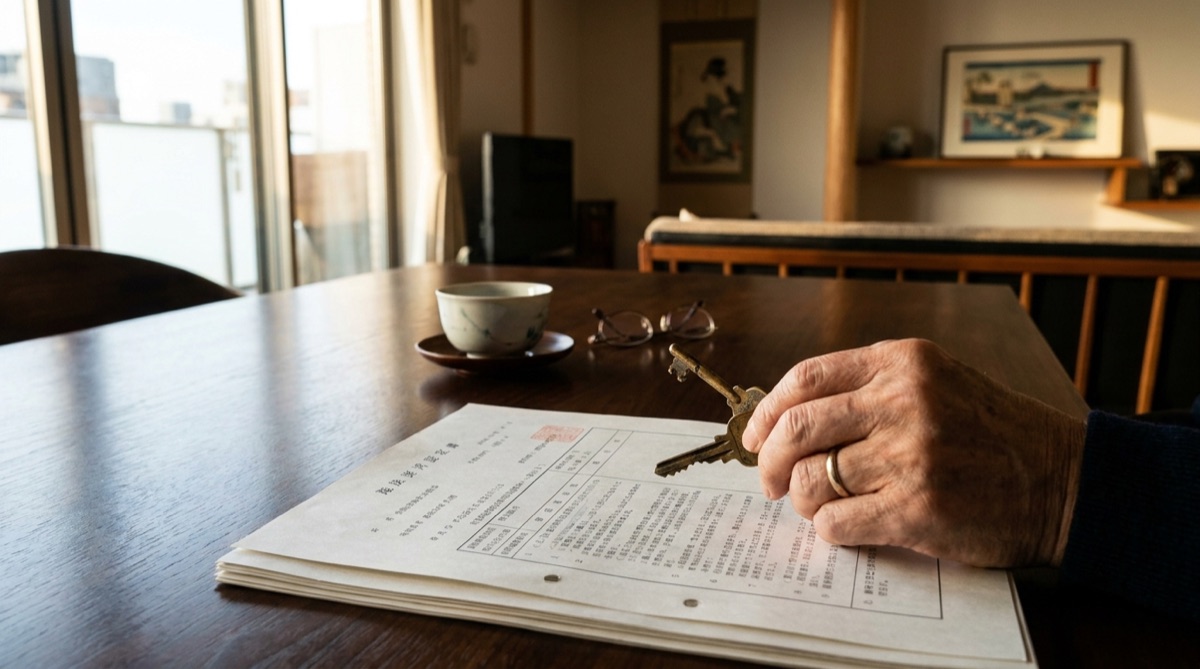
Until recently, holding inherited real estate had a quiet tax logic to it. Japan valued property for inheritance purposes using assessed figures — rosenka (a roadside land-value method) for land and fixed-asset assessments for buildings — that often sat well below actual market price. A clever estate could hold a condo or investment property and shrink its taxable value versus holding the same wealth in cash. Hold, don’t sell, was the rational move.
Japan’s 2026 inheritance-tax reform, drafted in November 2025, takes aim at exactly that. It re-bases real-estate valuations toward market reality and closes the condo and investment-property loophole that made holding attractive (details still settling as of writing — confirm specifics with a tax adviser before you transact). Strip out the valuation discount and you strip out the reason to hold. The rational move flips from hold to sell.
Translation for you: the reform doesn’t just maintain the supply of motivated sellers — it widens it. Estates that would once have clung to a property to game the valuation now have less reason to. More of them hit the market. The same 10-month clock applies to all of them.
The Catch — and Why It Protects Your Upside
Don’t romanticize this. A large share of akiya are genuinely unbuyable. Estimates suggest over 30% have unknown or unreachable owners, with title fragmented across multiple generations of heirs who never properly registered the transfer. You cannot buy a house from twelve scattered cousins, three of whom can’t be located. Walk away from those — fast.
But that mess is precisely what protects the buyer who does it right. Because so much of the stock is title-poisoned, the clean, sellable subset — clear single owner, registered title, deliverable in escrow — is genuinely scarce. Scarcity in the deliverable slice means it holds value and re-leases. Your edge isn’t finding cheap houses; cheap houses are everywhere. Your edge is finding cheap houses you can actually take title to and rent out. That’s a navigation problem, and navigation problems reward the prepared.
Japan also reformed inheritance-registration rules to make leaving title unregistered harder going forward, which should slowly enlarge the clean subset over time. Helpful tailwind, not a reason to wait.
Why the $25,000 House Headline Is a Trap
You have seen the article. A young couple from abroad buys an “abandoned” Japanese farmhouse for the price of a used car, sands the beams, and posts a renovation reel. The akiya story is not a lie. It is a content format. It rewards the dramatic before-and-after, not the spreadsheet that shows you underwater on resale.
Here is the part the reels skip. The price tag is the cheapest thing about an akiya. A listing at ¥1M (roughly $6,000-$7,000, directional, as of writing) routinely turns into a ¥12M project once you add a roof, foundation work, rewiring, plumbing, insulation, and the removal of decades of damp. The “free” homes that municipalities hand out to attract residents commonly need ¥5M-¥10M to become legally and practically livable. So the real check you are writing is not the purchase price. It is the renovation.
Then it got worse. As of April 2025, a change to the Building Standards Act removed the so-called “Category 4” exemption that let small two-story wood homes skip the permit process for structural work. Now that work needs permits, which run roughly ¥200,000-¥500,000, plus architect and structural calculations on top. Translation: the exact kind of hands-on structural renovation that makes a rural akiya viable just got slower and more expensive.
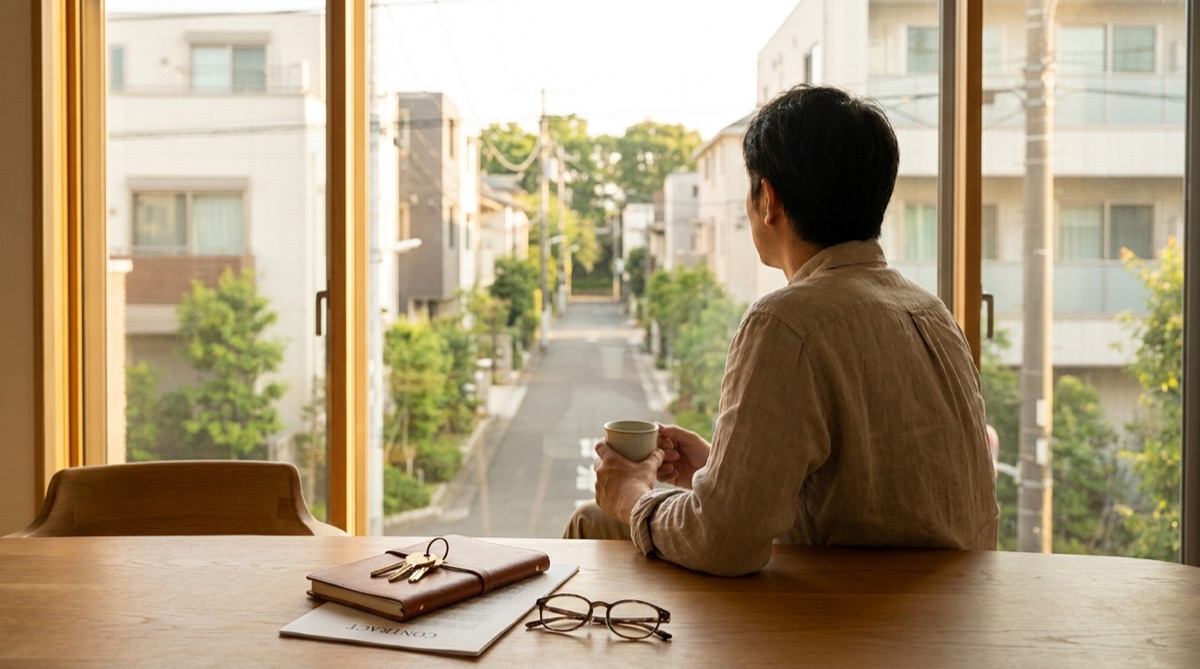
This is the trap, stated plainly. Rural Japanese land is often flat-to-declining in value, and in this country the building itself carries little-to-no resale value. Wooden homes are treated as depreciating assets that approach zero over a few decades, and the land underneath them is not appreciating to compensate, because the local population is shrinking and there is no line of buyers forming behind you. You buy a ¥1M shell, sink ¥12M-¥14M into making it livable, and end up roughly ¥15M all-in on an asset that the market may value at less than your renovation bill alone. There is no exit.
And because non-resident mortgages on these properties are essentially unavailable, over 90% of foreign akiya purchases are all-cash. So you are not just buying a depreciating asset. You are tying up unleveraged cash in an illiquid one. That is the worst combination in real estate: no appreciation, no leverage, no easy exit.
One honest caveat: a genuinely livable rural akiya bought as a lifestyle home, by someone who wants to live in the countryside and never intends to sell, can be a fine personal choice. That is lifestyle, not money. If your goal is a return, the location has to change.
Related reading: The 4-Year Depreciation Trick: How Used Wooden Houses Shelter Your Tokyo Rental Income.
Why Greater Tokyo Changes the Whole Trade
The standard akiya story is rural: a ¥3 million farmhouse four hours from anywhere, no tenants, no exit. True, and mostly a trap. Now point the same capital toward Greater Tokyo and watch the arithmetic flip.
The number that reframes it: Greater Tokyo alone is home to roughly 9 million seniors (directional). The inheritance wave isn’t only a countryside event — a huge share of it is landing in and around the largest, deepest rental and resale market in the country. An inherited home in an outer ward, or a commuter city in Saitama, Chiba, or Kanagawa, sits on top of real, durable tenant demand. Unlock it and it re-leases. That is the difference between a discounted asset and dead money.
The central-Tokyo end of that market shows what scarcity and demand compounding in the same direction look like. In FY2025, the average price of a new condominium in Tokyo’s 23 wards hit a record ¥137.84M, up roughly 18.5% year over year (directional, as of writing). Foreign-buyer participation reaches about 19.0% in the prime central wards of Chiyoda, Minato, and Shibuya, versus about 12.7% across the rest of the 23 wards. And supply is collapsing where demand is highest: only about 23,000 new condo units are forecast for greater Tokyo in 2026, the lowest in more than 50 years. Fewer new units chasing more foreign and domestic demand is the textbook setup for price support. Honest caveat: 18.5% in a year is not a forever rate, and prime Tokyo is not cheap. The point is that the structural forces — scarcity, foreign demand, a historic supply squeeze — all point the same way, while in rural akiya country they all point the other way. An inherited home on the commuter belt of that market sits downstream of the same demand.
Then there’s the value-add spread. Renovating an aged akiya typically runs ¥3 million to ¥15 million or more, depending on structure and ambition (directional). That’s a real cost — but a capped one. When you’re acquiring at a fraction of replacement cost and the renovation is a known, bounded number, the gap between [acquisition + renovation] and [post-renovation market value] is the spread you capture. In a Greater Tokyo location with genuine rental demand, that spread is where the return lives. Compare wards and rental depth on our /wards pages before you fall for a headline price.
How to Actually Move on This
This is a buyer’s market that rewards three things: cash, patience, and title discipline. Here’s the sequence.
Define your goal honestly. Lifestyle home you will never sell? A rural akiya can work — go in with eyes open on the renovation and the April 2025 permit rules. Return on capital? Cross the deep countryside off the list. Use our compare tool to put an akiya’s all-in cost (purchase plus realistic renovation) next to a Greater Tokyo unit’s price, financing, and appreciation profile side by side. Seeing them in the same table usually ends the debate.
Buy where tenants are. Anchor your search to Greater Tokyo and its commuter belt, not the deep countryside. Re-leasability is what converts a cheap inheritance into a cash-flowing asset. Use /wards and /compare to pressure-test demand before price.
Filter for clean title first, price second. Single registered owner, deliverable in escrow. If the ownership is fragmented across unreachable heirs, pass without hesitation — the discount never compensates for an undeliverable deal. A shihoshoshi (judicial scrivener — a licensed title and registration specialist) earns their fee here.
Underwrite the full stack. Acquisition plus a realistic ¥3–15 million renovation plus holding costs, against an honest post-renovation rent and resale. Run it as a spread, not a sticker price. Our /tools and /glossary pages help you translate the local terms and put real numbers on it.
Position for the wave, not the day. Deaths peak around 2040 and the 2026 reform keeps pushing inventory out. You don’t need to catch a bottom. You need to be a credible, cash-ready, fast-closing buyer when a motivated heir’s 10-month clock is running — because that’s the buyer who gets the deal at the price that works.
The thing locals fear is, for a prepared foreign buyer, a years-long supply of below-replacement-cost property landing next to the country’s deepest tenant demand. Get your cash, your title specialist, and your underwriting in place now — and be the buyer holding leverage when the clock starts ticking on the next estate. Put your capital where the data is, not where the algorithm is.