STRATEGY & YIELD
The Special-Zone Minpaku Pathway: Where the 180-Day Cap Doesn't Apply
Japan's special-zone minpaku (tokku minpaku) license removes the 180-day cap. Here's where it exists, what it costs, and whether it pencils out.
On this page 7
TL;DR: Japan’s National Strategic Special Zones Act created a separate minpaku framework — special-zone minpaku (tokku minpaku) — that removes the 180-day operating cap entirely. The trade-off: the minimum stay requirement is 2 nights (in some zones 6 nights historically), the designated zones are geographically limited, and the licensing process involves the municipality directly. For investors acquiring in these zones, the revenue math changes substantially.
When I explain the 180-day cap to foreign buyers, the first question is always whether there’s a way around it. There’s one legitimate path: buying in a designated special-zone minpaku area.
This isn’t a gray area. It’s a separate licensing regime created by the national government and implemented at the municipal level. The zones are designated. The rules are different. Whether it’s useful depends entirely on where you’re buying.
What Special-Zone Minpaku (Tokku Minpaku) Actually Is
Japan’s National Strategic Special Zones Act was created to attract foreign investment and promote economic deregulation in specific geographic areas. One of the deregulation measures within these zones is an alternative short-term rental licensing framework that operates outside the standard minpaku law (which imposes the 180-day cap).
Under special-zone minpaku (tokku minpaku):
- No 180-day annual cap on operating days
- Minimum stay requirement: varies by zone; historically 2–6 consecutive nights minimum
- Licensed directly by the municipality (not the prefecture)
- Physical facility requirements similar to hotel/ryokan in some respects (though lighter than full hotel classification)
- Regular inspections by the designated municipal authority
The critical difference from standard minpaku: you can operate 365 days a year. The critical difference from a hotel/ryokan license: the facility requirements are generally lighter, though not trivial.
From the desk — Every foreign buyer I sit down with asks the same thing within the first ten minutes: is there a way around the 180-day cap? When I point them toward the special-zone path, the pattern I keep seeing is that by the time a property in an established Osaka zone hits the market, the day-cap premium is already baked into the asking price, and the buyers who hesitate are usually the ones who assumed they’d found arbitrage nobody else had.
Where Special-Zone Minpaku Actually Exists
As of 2025–2026, special-zone minpaku areas are limited to specific locations where the national government has designated National Strategic Special Zones:
Osaka:
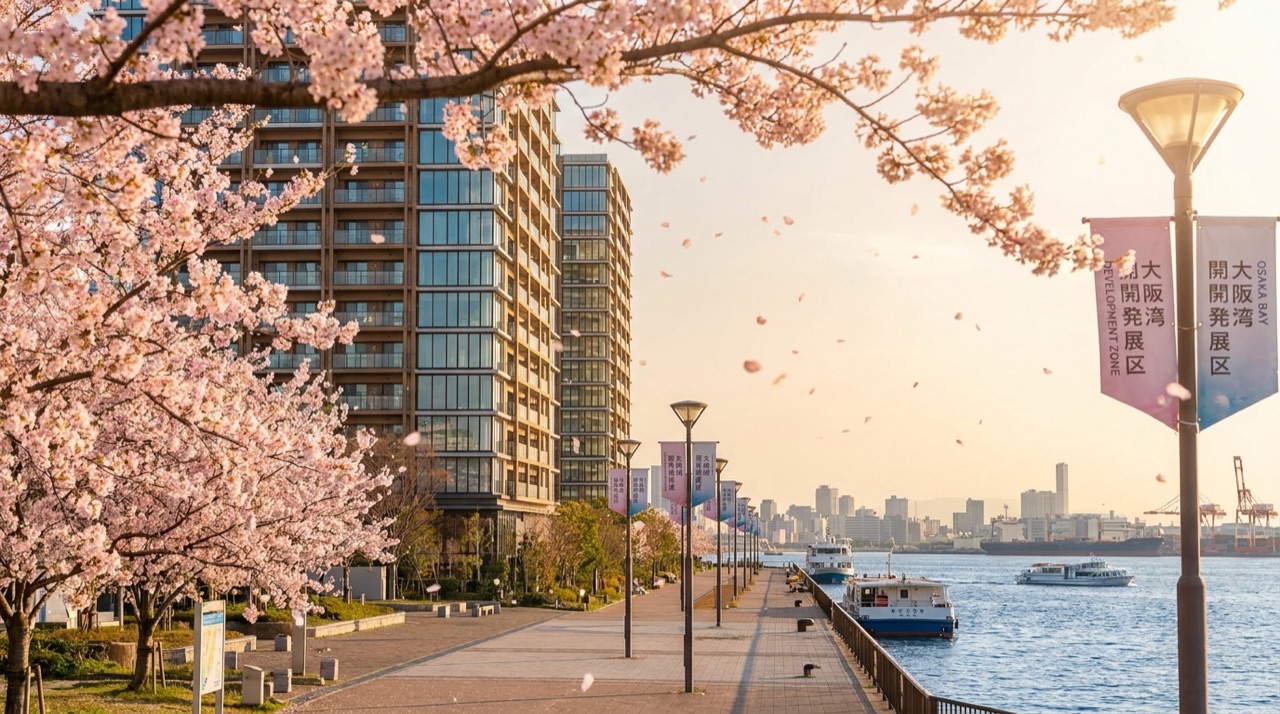
The most developed special-zone minpaku market in Japan. Osaka’s Nanko/Bays area and other designated zones within the city have active special-zone minpaku licensing. Osaka was the first major implementation and has the most established market data.
Tokyo:
Some Tokyo zones have National Strategic Special Zone designation (including parts of Ota-ku historically). However, Tokyo’s ward-level implementation has been less expansive than Osaka. Verify current zone boundaries with a Tokyo-licensed agent — the designations can change.
Other areas:
Several regional cities and areas have received National Strategic Special Zone designation for various deregulation purposes. Not all of these include the special-zone minpaku licensing component. Confirm whether a specific location’s designation includes the STR component before modeling on special-zone assumptions.
The zone list is not static. The national government can add or modify designations. Local municipalities can implement the framework or decline to do so even within a designated zone.
The Revenue Case for Special-Zone Minpaku vs Standard Minpaku
The difference in revenue ceiling is significant. Same property, two license types (illustrative):
| Metric | Standard Minpaku | Special-Zone Minpaku |
|---|---|---|
| Operating days | 180 | 365 |
| Occupancy rate | 65% | 65% |
| Booked nights | 117 | 237 |
| ADR | ¥20,000 | ¥20,000 |
| Gross room revenue | ¥2,340,000 | ¥4,740,000 |
The revenue delta at the same occupancy rate: ¥2,400,000 per year. Over a 10-year hold, that’s ¥24M in additional gross revenue before costs.
Costs don’t stay flat. Cleaning, utilities, and variable management costs roughly double with the doubled booked nights. Fixed costs (property tax, insurance, reserve) stay similar.
Operating cost comparison (illustrative, same 1LDK property):
| Cost Item | Standard Minpaku | Special-Zone Minpaku |
|---|---|---|
| Cleaning (turnovers × ¥10,000) | ¥530,000 | ¥1,078,000 |
| Management (20% of gross) | ¥468,000 | ¥948,000 |
| Utilities | ¥320,000 | ¥450,000 |
| Supplies | ¥150,000 | ¥250,000 |
| Insurance | ¥100,000 | ¥120,000 |
| Property tax | ¥170,000 | ¥170,000 |
| Tools | ¥80,000 | ¥80,000 |
| Maintenance reserve | ¥250,000 | ¥250,000 |
| Total costs | ¥2,068,000 | ¥3,346,000 |
NOI comparison (illustrative):
- Standard minpaku NOI: ¥2,340,000 − ¥2,068,000 = ¥272,000
- Special-zone minpaku NOI: ¥4,740,000 − ¥3,346,000 = ¥1,394,000
The special-zone minpaku generates ¥1,122,000 more NOI per year on the same property. On a ¥30M acquisition, that’s the difference between a 0.9% NOI yield and a 4.6% NOI yield.
What the Minimum Stay Requirement Means in Practice
Some special-zone minpaku areas historically required a minimum consecutive stay of 6 nights. This significantly affects which travelers can book — business travelers on short trips, weekend tourists, and spontaneous bookers can’t meet a 6-night minimum.
More recent special-zone implementations have moved toward 2-night minimums, which is more workable.
The minimum stay affects your occupancy assumptions. A 6-night minimum in Osaka effectively targets a different market segment (extended-stay leisure travelers, relocating expats, digital nomads) than a 2-night minimum property. ADR may be lower per night for longer stays due to length-of-stay discounts, but cleaning cost per night is significantly lower (fewer turnovers on longer stays).
If a special-zone area in your target location has a 2-night minimum, it operates much like a standard minpaku in terms of market access. If it’s 6 nights, factor the changed guest profile into your ADR and occupancy assumptions.
The Licensing Process
Unlike standard minpaku registration (prefectural government), special-zone minpaku licensing goes through the municipality — typically the city or ward office in the designated area.
General process (illustrative, varies by zone):
- Pre-consultation with the municipal STR authority: confirm the property address is within the designated zone and the facility meets baseline requirements
- Application submission: property photos, floor plans, facility compliance documentation
- Site inspection: municipal officials inspect the property
- License issuance: timeline varies, typically 2–4 months
- Annual compliance: some zones require periodic reporting
The facility requirements vary by zone but generally include minimum room size, ventilation, fire safety basics, and sanitation standards. Not as demanding as full hotel/ryokan in most cases — but not trivial.
Where This Goes Wrong
Zone misidentification. Marketing materials for some properties claim special-zone minpaku eligibility based on proximity to a National Strategic Special Zone designation, not confirmed inclusion. Verify the specific property address is within the licensable zone boundary. This requires confirming with the municipality, not inferring from a map.
Municipalities have pulled back. Some local governments within designated zones have not implemented special-zone minpaku or have added local restrictions that approach the standard minpaku framework in restrictiveness. Designations at the national level don’t guarantee permissive implementation at the city level.
Acquisition premiums. Properties in established special-zone minpaku areas in Osaka are priced with the income potential reflected. You’re not finding this arbitrage hidden in the market — buyers who know this framework already bid up qualifying properties. The NOI advantage shown above may already be capitalized into the purchase price.
The minimum stay cuts into market reach. A 6-night minimum Osaka property competing against Kyoto’s 2-night minpaku options faces a narrower traveler funnel. Get honest about the demand for extended stays in your specific location before assuming standard occupancy rates.
FAQ
Q: Is special-zone minpaku available in any Tokyo wards today? Ota-ku in Tokyo had special-zone minpaku designations in prior years. Current availability and boundaries should be confirmed directly with Ota-ku’s relevant department and a local agent. Tokyo’s special-zone minpaku market is much smaller than Osaka’s.
Q: Can I convert an existing standard minpaku registration to special-zone minpaku? These are separate licensing regimes. You’d need to apply for the special-zone minpaku license separately; the standard minpaku registration doesn’t transfer. If your property is in a qualifying zone, you’d apply for the special-zone minpaku license through the municipality.
Q: Does special-zone minpaku remove all municipal STR restrictions? No. Noise ordinances, waste disposal rules, building regulations, and other local rules still apply. Special-zone minpaku removes the 180-day cap; it doesn’t create a regulation-free zone.
Q: Is there a special-zone minpaku equivalent to Airbnb’s day-count blocking? The major OTAs don’t natively distinguish between standard minpaku and special-zone minpaku in their systems. You’d need to manage your calendar manually or through a property management system. This is where platform management discipline matters.
Q: Do I need a Japanese entity to hold a special-zone minpaku license? Similar to a hotel/ryokan license, special-zone minpaku licensing typically requires a Japanese legal entity or individual. Foreign investors generally need to structure through a Japanese company. Confirm requirements with the specific municipality.