STRATEGY & YIELD
ADR Benchmarks by Tokyo Neighborhood for 2026
Directional ADR benchmarks for Tokyo minpaku by ward and neighborhood for 2026 — sourced from operator experience, not just platform marketing data.
On this page 19
- How to Read These Benchmarks
- Central Tourist Wards: Highest ADR, Highest Competition
- Taito-ku (Asakusa, Ueno)
- Shinjuku-ku
- Shibuya-ku
- Minato-ku (Azabu, Roppongi, Shiba)
- Inner East Wards: Emerging STR Markets
- Sumida-ku
- Koto-ku (Kiyosumi-Shirakawa, Monzen-Nakacho)
- Western Wards: Residential Character, Lower STR ADR
- Setagaya-ku
- Nerima-ku, Adachi-ku, Edogawa-ku
- Specialty Segments: Where ADR Departs From the Median
- Entire Detached House, Any Central Ward
- Properties with Design or Heritage Character
- Seasonality: Why the Annual Average Misleads You
- Where ADR Benchmarks Go Wrong
- FAQ
- Final Note
TL;DR: Tokyo STR average daily rates vary sharply by ward, property type, and guest profile. A 1LDK in Asakusa runs materially different ADR than the same unit in Edogawa. This issue publishes directional benchmarks by neighborhood, explains what drives the variance, and flags where seasonality makes the annual average meaningless for operational planning.
Supply context (primary data, 2026): as of July 15, 2026 the wards with the most active minpaku registrations were Shinjuku (3,775 notified dwellings), Sumida (2,314), Shibuya (1,845), Toshima (1,826) and Taito (1,373) — against 56 in Chiyoda and 26 in Meguro (Japan Tourism Agency). ADR is set against that competing supply. Full 23-ward table: Tokyo 23 Wards Property Data 2026.
Every quarter someone publishes an “Airbnb Japan market report” with a national average ADR that tells you almost nothing useful. National averages blend a Shinjuku penthouse with a Saitama family home. The number that matters is the one specific to your ward, your property type, and your guest target.
What follows is based on operator-level experience and directional data from third-party platforms (AirDNA, Transparent). These are illustrative benchmarks, not guaranteed rates. Market conditions shift. The yen rate matters. Platform competition in any sub-market changes quarterly. Use these as a starting point for underwriting, not a finish line.
How to Read These Benchmarks
All figures are:
- For 1LDK (1-bedroom) units unless otherwise noted. Adjust upward ~30–50% for 2LDK, ~60–100% for 3LDK or entire-house listings.
- Blended annual ADR — not peak-only. The blend reflects seasonal distribution across typical booking patterns.
- Directional and illustrative — they reflect a range, not a precise point.
- Gross ADR (pre-OTA commission) — subtract ~16% for your actual realized rate.
From the desk — The buyers I watch get burned are the ones who underwrite off a single citywide ADR number and never check it against the specific ward, the specific block, the specific building’s bylaws. In years of walking clients through these wards, the gap I keep flagging is that two identical 1LDK units a fifteen-minute train apart can price tens of thousands of yen apart per night, and almost nobody believes me until I show them side by side.
Central Tourist Wards: Highest ADR, Highest Competition
Taito-ku (Asakusa, Ueno)
1LDK blended ADR (illustrative, as of writing): ¥18,000–¥24,000
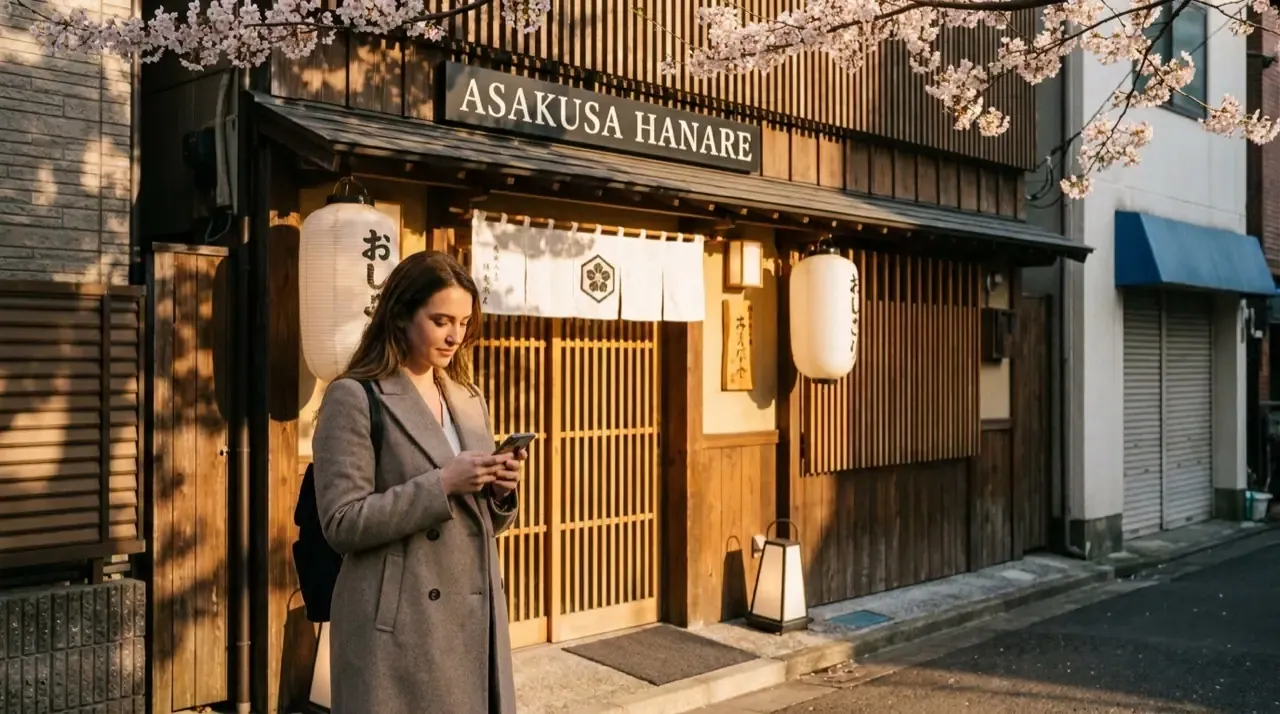
Asakusa is Tokyo’s most established inbound tourism neighborhood. Western travelers — particularly those seeking “authentic” Tokyo culture — drive demand. The guest profile skews toward higher ADR tolerance for well-presented traditional-aesthetic properties.
Seasonal spread is wide. Cherry blossom season (Ueno Park is steps away) can push ADR to ¥35,000–¥45,000. January–February valley rates drop to ¥14,000–¥18,000. The annual blend is pulled up by strong Q2 and Q4 performance.
STR supply in Taito-ku has increased since 2018, compressing rates somewhat. Properties that looked exceptional in 2020 now need stronger listings and amenities to hold premium rates.
Shinjuku-ku
1LDK blended ADR (illustrative): ¥19,000–¥26,000
High ADR driven by proximity to Shinjuku station, nightlife, and diverse restaurant access. Business travelers supplement leisure in this ward more than in Taito-ku. Mixed-use neighborhood means fewer building bylaw restrictions in some sub-zones.
Ward-level restrictions cut the practical minpaku operating window. Some residential zones in Shinjuku limit operations to weekend-only periods, which artificially pressures operators to price higher per night to hit revenue targets. This can work in high-demand locations; it compresses NOI in softer ones.
Shibuya-ku
1LDK blended ADR (illustrative): ¥20,000–¥28,000
Premium market. Shibuya adjacents (Harajuku, Daikanyama, Nakameguro) attract fashion and culture-focused travelers who pay for location. Properties within walking distance of Nakameguro’s canal or Harajuku’s shopping hold rate better through shoulder seasons.
Minpaku permit restrictions in Shibuya are among the strictest in Tokyo. Buyers in Shibuya need to verify operating eligibility at the specific address level before acquisition.
Minato-ku (Azabu, Roppongi, Shiba)
1LDK blended ADR (illustrative): ¥22,000–¥32,000
Minato-ku’s international neighborhood character — large expat population, embassies, high-end residential — drives strong ADR for well-finished units. Business travelers and short-term corporate relocation demand is higher here than in tourist-focused wards.
The trade-off: purchase prices in Minato-ku are Tokyo’s highest. A ¥25,000 ADR on a ¥60M 1LDK produces different yield math than the same ADR on a ¥32M unit in Taito-ku.
Related reading: RevPAR for Minpaku: The One Metric That Beats Occupancy and ADR Alone.
Inner East Wards: Emerging STR Markets
Sumida-ku
1LDK blended ADR (illustrative): ¥14,000–¥19,000
Positioned near Asakusa with somewhat lower acquisition costs. Historically restricted to weekend-only minpaku in significant parts of the ward, which limits annual booked nights substantially. Some sub-areas near Oshiage (Tokyo Skytree) run at the upper end of the range.
Lower ADR than Taito-ku but lower acquisition costs can produce competitive NOI yields if the operating window allows sufficient nights.
Koto-ku (Kiyosumi-Shirakawa, Monzen-Nakacho)
1LDK blended ADR (illustrative): ¥13,000–¥18,000
Kiyosumi-Shirakawa’s coffee culture identity has driven lifestyle media coverage that translates into STR demand — particularly from domestic Japanese travelers and young international visitors. ADR has been rising steadily.
Acquisition costs are lower than central wards, and minpaku operating restrictions are generally less severe than Shinjuku or Shibuya. Worth modeling if you’re targeting yield over ADR headline.
Western Wards: Residential Character, Lower STR ADR
Setagaya-ku
1LDK blended ADR (illustrative): ¥12,000–¥16,000
Primarily residential. STR demand here leans toward domestic leisure and families visiting for extended periods. Lower ADR reflects the neighborhood character — less tourist infrastructure, further from central attractions. Some sub-areas near Shimokitazawa have slightly higher ADR driven by music/subculture tourism.
Minpaku in residential Setagaya requires careful neighbor and building management relationship management. The ward isn’t known for tourist-friendliness at the street level.
Nerima-ku, Adachi-ku, Edogawa-ku
1LDK blended ADR (illustrative): ¥9,000–¥13,000
These outer wards serve budget-conscious travelers and domestic visitors. ADR is low relative to central Tokyo. The investment case here, if there is one, is low acquisition price and reasonable yield — not ADR performance.
Cautious on recommending these wards to foreign investors building a first Tokyo STR position. Lower ADR, longer travel times from airports and central attractions, and fewer inbound travelers who can absorb higher rates. The numbers can work at very low acquisition costs, but competition from business hotels in this segment is significant.
Specialty Segments: Where ADR Departs From the Median
Entire Detached House, Any Central Ward
Blended ADR (illustrative): ¥35,000–¥70,000+
Groups, extended families, and travelers seeking privacy pay substantial premiums for entire house listings. A 3-bedroom detached house in Taito-ku or Sumida-ku sleeping 6–8 guests runs ADR that a 1LDK can’t approach. Cleaning costs and management complexity scale up, but the revenue multiple is real.
If you’re acquiring for STR with flexibility on property type, a detached house in an inner ward often outperforms a condo on a per-unit basis, assuming the building and zone permit minpaku.
Properties with Design or Heritage Character
ADR premium over comparable properties: roughly 20–40%
“Character” listings — exposed concrete, midcentury design, renovated traditional elements, exceptional views — consistently outperform identical-spec units in the same building. Professional photography and interior design investment pays back in ADR.
This is the most controllable variable in your pro forma. Most operators underinvest here.
Seasonality: Why the Annual Average Misleads You
Tokyo STR ADR is not flat across the year. The spread between peak and trough is significant:
| Period | ADR Index (100 = annual average, illustrative) |
|---|---|
| Late March–early April (cherry blossom) | 160–200 |
| Golden Week (late April–early May) | 150–180 |
| Mid-October–mid-November (autumn foliage) | 140–170 |
| July–August (summer, humid) | 100–120 |
| September | 90–100 |
| January–February (low season) | 75–90 |
If you’re deploying 180 days under the minpaku cap, front-loading toward the index-160+ periods is how you maximize revenue within the constraint. An operator who books primarily during cherry blossom and autumn foliage seasons — and goes offline during low-ADR January — extracts more from their 180 days than one who distributes evenly.
Dynamic pricing tools capture much of this automatically. The calendar strategy on top of that is the operator’s job.
Where ADR Benchmarks Go Wrong
Platform reported ADR includes outliers. AirDNA and similar platforms aggregate data from listed properties including those with very high minimums, those that never book at stated rates, and properties run as experiments by new operators. The median is more useful than the mean.
Yen exchange rate effects. Inbound demand and ADR for foreign-traveler-targeted properties correlates with the yen rate. Strong yen (below ¥130/USD) compresses inbound demand; weak yen (above ¥150/USD) boosts it. The 2023–2025 weak yen environment inflated inbound STR demand. If the yen strengthens, ADR assumptions built on 2024 data may not hold.
New competition. Popular sub-markets attract new listings. Asakusa STR supply has grown meaningfully since 2020. Rate compression follows supply growth with a 12–18 month lag. Model with a 5–10% downward pressure on current ADR benchmarks for supply-saturated sub-markets.
Building-level restrictions that reduce the comparison pool. If a ward’s data includes many hotel/ryokan-licensed properties running 365 days, the ADR benchmark reflects a different competitive set than minpaku-only properties. This can make the market look stronger than it is for your specific license type.
Related reading: Minpaku vs Hotel/Ryokan License: The License Decision That Sets Your Ceiling.
FAQ
Q: What’s the single highest-ADR sub-market in Tokyo for minpaku? Directionally: central Shinjuku and Minato-ku lead on 1LDK ADR. For whole-house listings, well-located Taito-ku detached properties can exceed Minato-ku on absolute nightly revenue.
Q: How quickly do ADR benchmarks change? Materially within 12–18 months in active sub-markets. The figures in this issue should be re-verified before any acquisition decision made more than 6 months after publication.
Q: Should I target ADR maximization or NOI? NOI. ADR is an input; NOI is the output. A ¥28,000 ADR property that’s expensive to clean, manage, and maintain may NOI-underperform a ¥19,000 ADR property with efficient operations.
Q: How does Tokyo compare to Osaka and Kyoto on ADR? Osaka STR ADR runs lower than central Tokyo on average, but special-zone minpaku (no day cap) compensates with volume. Kyoto runs higher ADR for unique properties (machiya) but lower volume on standard units. Tokyo is the most liquid STR market in Japan.
Q: Where do I get current ADR data before making an acquisition? AirDNA’s paid tier offers neighborhood-level data updated monthly. Transparent (institutional tier) is more accurate for serious underwriting. Your property manager’s portfolio data is the best local benchmark if they manage 15+ units in your target ward.
Final Note
This wraps the eight-issue series on Tokyo and Japan STR as a business. The framework: model the 180-day cap first, choose your license path second, run the full P&L before assuming STR beats long-term rental, and treat ADR benchmarks as directional inputs rather than guaranteed rates.
The market is real. The yen makes Tokyo accessible for foreign capital. Inbound tourism demand is structural, not cyclical. The operators who understand the regulatory framework — the 180-day cap, the license options, the municipal variance — are the ones who build positions that last.