INSIDER TAKE
The Akiya Myth: Why the $25,000 House Headline Is a Trap (and Where the Real Money Actually Is)
The viral "free abandoned Japanese house" story sends foreigners to the worst-performing corner of the market. Here is why akiya are the wrong trade, and where the data says the money actually sits.
On this page 6
TL;DR: The viral story of the cheap abandoned Japanese house is real, but it is optimized for clicks, not returns. A $25,000 rural shell almost always turns into a ten-million-yen renovation project sitting on land that is actively losing value with no buyer behind you. The same money put into central Tokyo, where foreign demand and supply scarcity are compounding, does the exact opposite. We are not telling you akiya are fake. We are telling you they are the wrong trade.
The headline number is not the buyable number
You have seen the article. A young couple from abroad buys an “abandoned” Japanese farmhouse for the price of a used car, sands the beams, and posts a renovation reel. The number that travels with that story is Japan’s vacant-home count: roughly 9 million empty homes, about 13.8% of all housing stock, per the 2023 Housing and Land Survey. It sounds like a fire sale with 9 million tickets.
It is not. Most of those 9 million are not for sale to you. Many are rentals between tenants, homes already listed on the normal market, or second homes someone actively uses. The true no-use, no-owner category, the thing people mean when they say akiya (an empty, unused house), is closer to 3.85 million. And only a sliver of that is the photogenic “derelict deal” being sold for a million yen. The scary headline number is a measure of demographic decline, not of inventory you can profitably buy.
That distinction matters because the whole emotional pull of the akiya story rests on scale. “Millions of free houses” feels like an opportunity too big to ignore. The buyable, sensibly located, structurally sound subset is a much smaller and much less romantic pool.
From the desk — The akiya inquiries that cross my desk almost always start with a screenshot of a viral renovation video, and almost always end the same way once we price the roof, foundation, and rewiring honestly. In my experience the cheap headline number rarely survives the first real contractor estimate, and the buyers who came chasing a bargain quietly pivot to a financeable Tokyo unit instead.
The purchase price is a rounding error
Here is the part the reels skip. The price tag is the cheapest thing about an akiya.
A listing at ¥1M (roughly $6,000-$7,000, directional, as of writing) routinely turns into a ¥12M project once you add a roof, foundation work, rewiring, plumbing, insulation, and the removal of decades of damp. The “free” homes that municipalities hand out to attract residents commonly need ¥5M-¥10M to become legally and practically livable. So the real check you are writing is not the purchase price. It is the renovation, and the renovation is where the money goes to die.
Then it got worse. As of April 2025, a change to the Building Standards Act removed the so-called “Category 4” exemption that let small two-story wood homes skip the permit process for structural work. Now that work needs permits, which run roughly ¥200,000-¥500,000, plus architect and structural calculations on top. Translation: the exact kind of hands-on structural renovation that makes an akiya viable just got slower and more expensive. The math that was already thin got thinner.
One honest caveat: a genuinely livable rural akiya bought as a lifestyle home, by someone who wants to live in the countryside and never intends to sell, can be a fine personal choice. This piece is about money, not lifestyle. If your goal is a return, keep reading.
You can spend ¥15M and own less than that
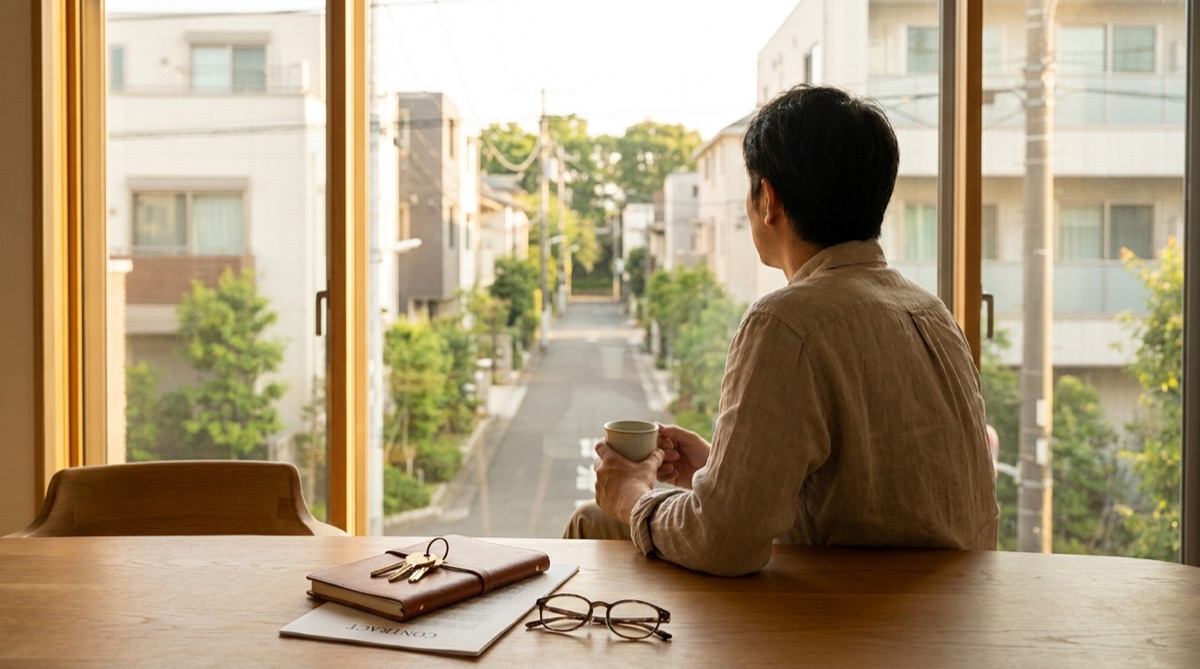
This is the trap, stated plainly. Rural Japanese land is often flat-to-declining in value, and in this country the building itself carries little-to-no resale value. Wooden homes are treated as depreciating assets that approach zero over a few decades, and the land underneath them is not appreciating to compensate, because the local population is shrinking and there is no line of buyers forming behind you.
So the full picture looks like this. You buy a ¥1M shell, sink ¥12M-¥14M into making it livable, and end up roughly ¥15M all-in on an asset that the market may value at less than your renovation bill alone. There is no exit. The thing that makes a property an investment, a deeper pool of buyers willing to pay more later, is precisely what rural akiya lack.
And because non-resident mortgages on these properties are essentially unavailable, over 90% of foreign akiya purchases are all-cash. So you are not just buying a depreciating asset. You are tying up unleveraged cash in an illiquid one. That is the worst combination in real estate: no appreciation, no leverage, no easy exit.
Central Tokyo runs the opposite way
Now point the same capital 200km away and watch the arithmetic flip.
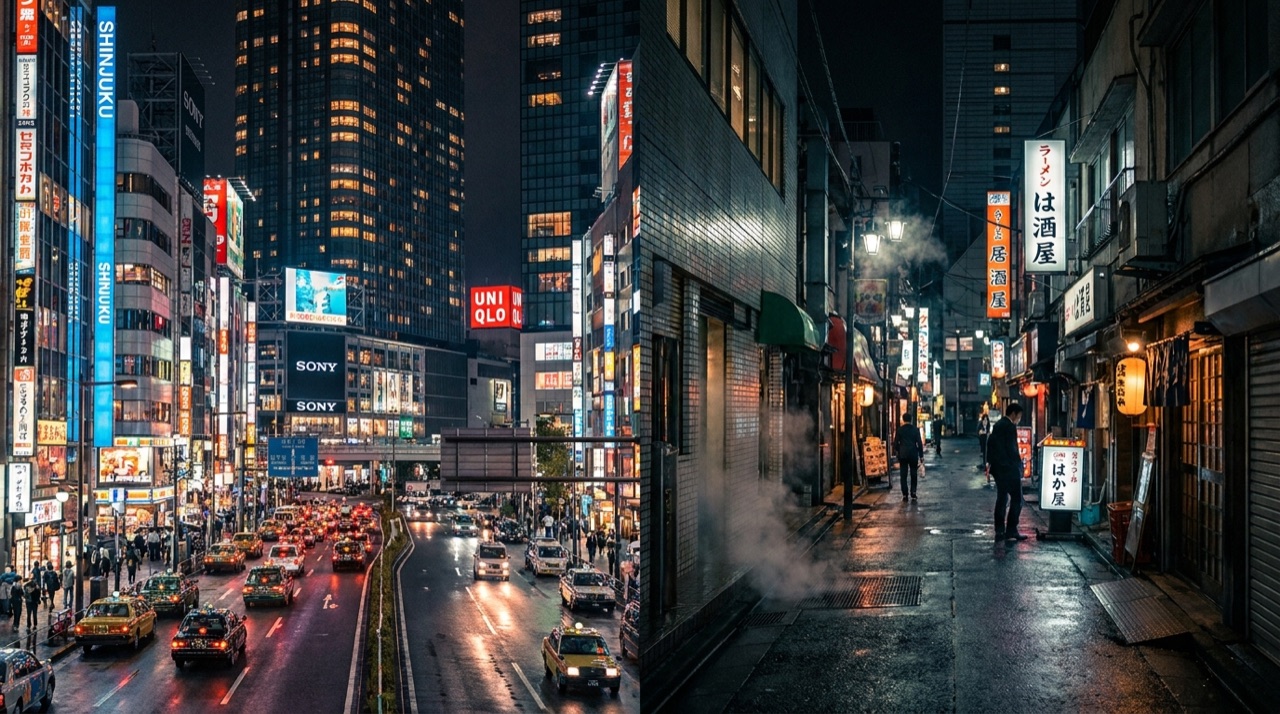
In FY2025, the average price of a new condominium in Tokyo’s 23 wards hit a record ¥137.84M, up roughly 18.5% year over year (directional, as of writing). That is not a rural shell quietly losing value. That is scarcity and demand compounding in the same direction.
The drivers are concrete, not vibes. Foreign-buyer participation reaches about 19.0% in the prime central wards of Chiyoda, Minato, and Shibuya, versus about 12.7% across the rest of the 23 wards. The smart-money flow is concentrated, not scattered. And supply is collapsing where demand is highest: only about 23,000 new condo units are forecast for greater Tokyo in 2026, the lowest in more than 50 years. Fewer new units chasing more foreign and domestic demand is the textbook setup for price support.
Critically, financed Tokyo product lets you put leverage behind an appreciating asset, the mirror image of the all-cash akiya. (Non-resident financing is real but selective; you can see how the ward-level demand and supply picture breaks down in our ward guides.) That is the difference between owning an asset that works for you and one that quietly works against you.
Honest caveat: 18.5% in a year is not a forever rate, and prime Tokyo is not cheap. The case here is not “prices only go up.” It is that the structural forces, scarcity, foreign demand, and a historic supply squeeze, all point the same way, while in rural akiya country they all point the other way.
The same money, two different futures
Picture ¥15M deployed two ways. In rural Japan, it buys a shell plus a renovation on land that is depreciating, with no resale market and your cash locked in unleveraged. In central Tokyo, that same capital is a down payment or an equity stake in a scarce, financeable unit in the one corner of the market where foreign demand and shrinking supply are both compounding. Same money. Opposite trajectories.
The akiya story is not a lie. It is a content format. It rewards the dramatic before-and-after, not the spreadsheet that shows you underwater on resale. The thing it is genuinely good at, a personal project for someone who wants rural Japanese life, is a real and valid thing. It is just not an investment, and it is not where the money is.
What to do next
If you came to Japan chasing the cheap-house headline, redirect that energy before you wire a deposit. Three concrete moves:
First, define your goal honestly. Lifestyle home you will never sell? An akiya can work, go in with eyes open on the renovation and the April 2025 permit rules. Return on capital? Cross akiya off the list and look at prime Tokyo.
Second, run the real numbers, not the listing price. Use our compare tool to put an akiya’s all-in cost (purchase plus realistic renovation) next to a central-Tokyo unit’s price, financing, and appreciation profile side by side. Seeing them in the same table usually ends the debate.
Third, map where the demand actually is. Start with the ward guides for Chiyoda, Minato, and Shibuya, where foreign participation and supply scarcity are concentrated, and check any unfamiliar terms in the glossary so reikin (non-refundable “key money” paid to a landlord) and similar costs never surprise you at signing.
The smart trade here is not the cheapest house in Japan. It is the scarce one in the city the rest of the world is trying to buy into. Put your capital where the data is, not where the algorithm is.